Seasonal Guide to Basement Waterproofing for London Ontario Homeowners
Owning a house in London, Ontario means making peace with water. The city sits on a mix of silty clay and sandy loam, and the Thames River basin keeps groundwater lively in spring. Freeze https://louisejcj302.raidersfanteamshop.com/weeping-tiles-and-foundation-health-in-london-ontario-myths-and-facts-1 and thaw cycles flex foundations. Summer storms can dump a month’s rain in one afternoon. The same brick foundations that have held up century homes in Old North also carry a record of past floods in their mortar joints. If you want a dry, healthy basement, you do not fight water once a decade. You keep pace with it season by season.
This guide gathers what tends to work here, with the kind of specifics that help on a wet Saturday morning when the sump is cycling nonstop. Whether you are planning a full exterior excavation or just trying to stop a musty smell, you will find the logic behind each step and how to time the work through the year. Along the way we will connect the dots between basement waterproofing London Ontario homeowners commonly request, and the foundation repair London Ontario homes need as they age.
How water finds its way in London homes
Water is predictable if you speak its language. In our area, it takes four main paths into a basement. Hydrostatic pressure pushes groundwater through hairline cracks when the water table rises in spring. Lateral pressure shoves saturated clay against the wall until a mortar joint opens. Capillary action wicks moisture through porous block or old brick, showing up as paint blistering or efflorescence. Finally, bulk water from roof runoff, downspouts, or overflowing window wells simply pours in where grading or drainage comes up short.
London’s clay is a big character in this story. When it swells, it can bow a wall by several millimetres in a wet year, then relax in August. Clay holds water against the foundation longer than sandy soils do. Paired with older weeping tiles that have silting issues, this makes spring and early summer the prime season for a wet basement London Ontario residents complain about. Newer subdivisions on fill can have different quirks, such as settlement that opens a stepped crack in the corner of a poured wall within the first five years.
Understanding which of these forces is at work on your house helps you choose the right fix. Epoxy injection stops a through crack. It will not resolve chronic hydrostatic pressure caused by a failed weeping tile. Similarly, an interior membrane can control seepage and protect finishes, but it will not relieve exterior soil pressure that is bowing a wall.
Basements by era and common risk points
The era of your house shapes the water path. Pre-1950 brick or block foundations often rest on shallow footings with little or no exterior waterproofing, and clay tiles for drainage that clog over time. You will see hairline mortar fissures that darken after a storm, and stains at the floor wall joint. Poured concrete from the 1960s on generally performs well if cracks are maintained, but settlement and shrinkage do create vertical fissures that leak on the first heavy rain of spring. In the last 20 years, code has improved, yet backfill practices vary. I have seen new homes with pristine dampproofing but downspouts dumping directly at the wall.
Add to this London’s mixed grading. In older areas with mature trees, roots have lifted paving and created negative slope back to the house. In new builds, final grading sometimes settles enough in the first two winters to pull topsoil away from the foundation and form a shallow trough. Either way, water sits where you least want it.
A seasonal rhythm that works
The right work at the right time reduces stress and cost. Here is how I organize a year for clients who want to stay ahead of water.
Spring: test the system under load
Spring is an honest teacher. Snowmelt and April rains put maximum pressure on the footing drains and the sump. If you are going to learn where the weak link is, this is when you will find it. I encourage homeowners to walk the basement after a long rain. Bring a bright flashlight and a notebook. Check the cold joints, the corners where wall meets floor, and along any old crack repairs. If you smell that sweet, chalky odor of damp lime, scrape a patch of paint to look for efflorescence. On block walls, feel for cool, damp spots along mortar lines.
Run a bucket test on the sump. Lift the float to cycle the pump and time how long it takes to evacuate a set volume, usually about 20 litres for a typical basin. If your pump labours or trips the breaker, do not wait until June storms to replace it. I prefer a 1/2 HP primary for most London homes, with a separate battery backup rated for at least 8 hours of intermittent operation. Basements with a finished suite should consider a water powered backup, but only if the municipal pressure at your address is consistently strong. Not every part of the city has the same service pressure, so ask your plumber to confirm flow rates.
Spring is also the moment to test for sewer backup risk. If your floor drains gurgle during a big rain, ask a licensed plumber about a backwater valve. While subsidy programs change, it is worth checking the City of London website for current policies related to flood mitigation. Even if there is no grant, a backwater valve can prevent the worst kind of basement damage.
Summer: heavy work, exterior fixes, and structural repairs
Dry soil and stable weather make summer the season for exterior waterproofing, weeping tile replacement, and any foundation repair that involves excavation. If you are planning a full perimeter dig, expect a trench roughly 2 feet wide down to the footing, new perforated drainpipe set in clean 3/4 inch stone with filter fabric, a new dimpled membrane on the wall, and careful backfill. In most London neighborhoods, utilities run near the foundation, so book Ontario One Call well in advance and be prepared for a staggered crew schedule. The exterior route costs more, but it resets the system, relieves lateral pressure, and protects the wall itself.
On structural issues, this is the window to correct a bowing wall or stabilize a settled corner. Carbon fiber straps, properly epoxied and anchored, work on modest deflection in block walls where movement has stopped. If the wall is still moving or shows over 1 inch of bow, steel beams or excavation and relief are in order. For settlement, helical piles can lift and hold a sunken corner, especially on additions where fill was not compacted well. These are not cosmetic decisions. Test the wall with a plumb line and track readings in spring and fall. I have seen homeowners talk themselves into paint when a beam was needed. Paint does not push back against clay.
Summer is also ideal for window well upgrades. If your basement windows sit below grade, install wells deep enough to sit 6 inches beneath the sill, set a proper drain to the weeping tile, and add a clear cover. I once traced a yearly leak to a well filled with maple leaves. Every storm, the well became a bathtub that spilled through a steel window frame. A cover fixed it for good.
Fall: the second check and roof-to-ground tuning
Autumn is kinder, but it tests the roof and exterior drainage more than the soil. Clean gutters thoroughly, flush downspouts, and extend them at least 6 to 10 feet away from the foundation. Extensions that stop at the first paving stone often splash back. Watch the discharge point during a rain. If you see a fan of water against the wall, you moved the problem 3 feet, not 10.
Rake grading smooth where summer foot traffic or kids’ bikes carved ruts that now tilt toward the house. Top up with a clay-based soil, not just black garden loam, and tamp it gently so it does not settle in the first storm. Check caulking around penetrations like gas lines or hose bibs. In London’s freeze cycles, a failed bead will widen quickly once water gets in.
Inside, walk the basement again after a good fall storm. This is your chance to compare notes with spring. If a damp patch repeats in the same spot both seasons, look beyond simple seepage. Chronic repetition often points to a failed tie in a poured wall or a broken section of exterior drain.
Winter: moisture control and quiet fixes
When the soil locks up, you shift to indoor humidity and maintenance. A cold snap can drive humid indoor air to condense on cold corners, behind storage racks, and along window perimeters. Run a hygrometer in the basement and keep relative humidity near 40 percent in winter to reduce condensation. Dehumidifiers work less efficiently in cold rooms, so place them in the conditioned area and circulate air with a small fan.
Winter also gives you time to plan larger work for spring. If you need foundation repair quotes, gather them now. Reputable contractors in London often book early. Compare scopes carefully. If two quotes are wildly different, ask each to describe the water path they are solving. The best waterproofing plans read like a story that matches your house.
Practical signs you should not ignore
You can live with a little harmless damp for years, until it is not harmless. The following clues separate nuisance moisture from problems that deserve action:
- A line of crystalline white residue, about as thick as a pencil mark, tracing along a mortar joint. One line is common. A maze of lines across multiple courses tells you water is wicking broadly, not just through a point crack.
- A hairline vertical crack in poured concrete that darkens after rain and leaves a dime-sized puddle on the slab. The crack itself can be injected, but the puddle hints at sustained hydrostatic pressure, not just a one-off trickle.
- Musty odor that returns two days after you run a dehumidifier. Persistent smell points to ongoing wetting of organic material, often behind finished walls or under vinyl plank. I have pulled up brand new flooring to find grey mold blooming under the foam pad because the slab was never tested for moisture.
- Effervescence under latex paint that flakes in coin-sized circles. This tells you the wall is trying to breathe through a non-breathable coating. Simply repainting traps more moisture.
- A whisper of soil along the sump discharge in the yard after each pump cycle. That fine silt means your discharge point is eroding a pocket, which can settle the line and choke it later.
Interior or exterior waterproofing: which fits the problem
I hear this question every week. The answer is not a binary. It depends on cause, budget, timing, and what you ask the system to do.
Interior systems work from the inside to intercept water and direct it to a sump. This includes cutting a trench at the slab perimeter, installing a perforated drain, and sealing the joint with a cove plate and dimple board. They shine when you have widespread seepage through block or multiple wall floor joints, and you want to finish the space or protect storage. They do not reduce lateral soil pressure or stop exterior water from contacting the wall. For many London basements with minor seepage and good structural health, interior systems offer a reliable, lower cost path.
Exterior systems treat the source. Excavation to the footing, membrane application, weeping tile replacement, and proper backfill give you a dry wall and relieve pressure. If you have a bowed wall, cracked parging that weeps, or a clogged weeping tile, this is the path that addresses cause. It costs more and disrupts landscaping. In clay soil, the performance difference is significant because clay holds moisture. You feel that relief in the lower cycling rate of your sump during heavy rain.
Crack injection is the surgical option. For a single vertical crack in a poured wall, a polyurethane injection, installed from the interior, expands to fill the path of least resistance and can remain flexible. Epoxy bonds the concrete and is ideal when you want structural strength as well as water stop. I like to ask clients about future plans. If you intend to finish that wall, the extra cost of epoxy can be worth it.
Costs you can plan around
Pricing varies with scope, access, and surprises. For a typical interior perimeter drain with a new sump in London, expect a range of roughly CAD 80 to 140 per linear foot, depending on slab thickness, number of corners, and discharge complexity. A basic crack injection might run CAD 450 to 900 per crack, with additional cost if access is restricted by studs or built-ins. Exterior excavation and full waterproofing usually falls between CAD 140 to 260 per linear foot, more if you need to shore a deep dig or rebuild walkways.
Structural foundation repair adds a different scale. Carbon fiber reinforcement runs CAD 600 to 1,200 per strap installed on a block wall, spaced 4 to 6 feet apart, with price moving up if parging removal is extensive. Steel I-beams typically land in the CAD 2,500 to 4,500 per beam range, installed and anchored. Helical piles for settlement vary widely. A single pile can be CAD 2,000 to 4,000, and a corner often requires two to four piles.
If you plan a major project, ask about staging. You can split an exterior job into two sides in consecutive summers, which reduces landscape disruption and cash flow shock. Interior systems can also be staged, but keep in mind that water will find the lowest route, so partial systems sometimes make the remaining section work harder for a season.
Drainage and grading details that punch above their weight
Most wet basements start outside with simple misses. The good news is that small fixes can have big impact here. Downspout extensions should be long enough that water cannot creep back under mulch or through a stone border. If your extension runs across a walkway, consider a buried pipe with a pop-up emitter 10 to 15 feet out. I advise a slight swale away from the house rather than a steep slope that sheds mulch and exposes roots.
Window wells deserve careful attention. A well with no drain is a bowl. Tie the well drain to the footing drain, not into a dry well of its own unless soils percolate well on your property. In much of London clay, a separate dry well fills and stays full. In winter, that frozen water pushes against the window and loosens seals.
Egress windows in basement suites bring extra moisture challenges. The larger opening collects more rain. Cap flashing, weep paths, and a properly graded well become critical. If you see condensation on the inside pane that does not clear with normal humidity control, check the slope and the sealant around the frame.
Finally, watch where your sump discharges. If you route it into a side yard that slopes back to the house, your pump will short cycle in a rain, creating a loop. I have rerouted discharge lines 20 feet and cut pump cycles by half during a storm.
Tying basement waterproofing to foundation repair
Basement waterproofing and foundation repair live together. Water creates many of the forces that move a foundation. Fixing water paths often halts movement. For example, I worked on a 1970s block home in Masonville with a bow that had held steady at 3/4 inch for two years. The weeping tile was clay and clogged. We replaced the exterior drain, added a dimpled membrane, and reset the grading. The wall stabilized without beams, and carbon fiber straps provided insurance. Two winters later, readings remained unchanged.
On the other hand, there are times when you address structure first. A poured wall with a horizontal crack mid-height that opens and closes seasonally points to soil pressure. Here, beams or excavation to relieve pressure should come before finishing the interior. Injecting that crack alone would be a bandage, not a cure.
If you are searching for foundation repair London Ontario providers, ask them to describe both the water management plan and any structural reinforcement. A trustworthy contractor will explain why each part belongs and what problem it solves.
Permits, inspections, and warranties
Interior waterproofing rarely demands a building permit, but structural repairs and exterior excavations can. In London, you must call for utility locates before any dig, and you may need to protect sidewalks or the right of way if work approaches the front setback. Ask your contractor to show proof of locates and insurance. For structural work, request engineer involvement when movement exceeds minor tolerance. An engineer’s letter may also be valuable when selling the home later.
On warranties, read the fine print. Lifetime warranties can sound generous, but they often apply to the installer’s lifetime in business or only to a specific failure mode. A crack injection warranty may exclude hydrostatic conditions or movement. An interior system warranty may not cover damage to finishes. Write down three or four scenarios you actually worry about and ask if they are covered in plain language.
A short seasonal checklist to keep by the panel
- Spring: test sump and backup, inspect walls after the first long rain, and look for consistent damp spots.
- Summer: schedule exterior work, correct structural issues, and upgrade window wells with proper drains and covers.
- Fall: clean gutters and extend downspouts 6 to 10 feet, tune grading with clay-based soil, and reseal penetrations.
- Winter: manage humidity near 40 percent, circulate air in quiet corners, and line up quotes for spring work.
- Year round: track wall movement with a plumb line, log pump cycles during storms, and photograph any changes.
Working with contractors and setting expectations
Get at least two quotes, three if the scopes differ. Invite each contractor to walk the exterior, the interior, and the neighborhood context. A house at the bottom of a gentle bowl of backyards faces a different load than a house on a ridge, even if both are in the same subdivision. Ask what the crew does when they hit surprises, like old rubble backfill or a buried concrete patio. Changes are part of real work. You can judge a contractor’s quality by how clearly they explain the plan for surprises.
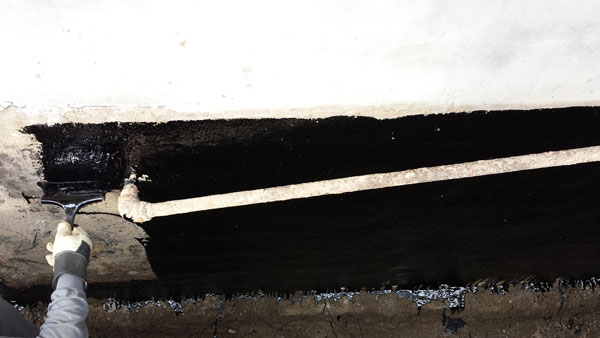
Schedule matters. Exterior waterproofing takes time for locates, set up, and respectful excavation. A tidy crew will stockpile topsoil separately from clay and replace it properly. If they treat your roses like debris, they may treat your footing the same way. Inside, dust control and protection of finishes are worth money. Cutting a trench in a finished basement without proper containment spreads concrete dust through the whole house.
Finally, think about the future. If you plan to finish the basement, discuss thermal breaks and vapor control with whoever handles your waterproofing. A dry wall is not necessarily a comfortable wall. Foam insulation and a smart vapor retarder can make the finished space feel like part of the house rather than an afterthought. A good basement waterproofing plan leaves you options, not new constraints.
Two brief case notes from London neighborhoods
In Byron, a 1960s bungalow on a slope backed onto a treed lot. The homeowner saw a wet line along the rear wall every April and assumed a crack. He had injected it twice over a decade with temporary relief. A dye test showed the window wells overflowing into the wall cavity. The wells were shallow and had no drains, and the slope delivered half the backyard’s water to that one point. We installed deeper wells tied to the footing drain, extended downspouts 12 feet, and regraded a gentle swale. No water entered the basement the next spring. The original crack repair was fine. The water path was wrong.
In Stoneybrook, a 1980s two story had a slight inward bow on a block wall and paint blistering in three spots. The owner wanted to finish the basement for a teenager’s bedroom. Measurements over six months showed no ongoing movement, but the weeping tile was failing. In summer, we excavated, replaced the drain, added a membrane, and installed carbon fiber straps in the two bays that had the most deflection. The finish carpenters came in fall. The teenager sleeps in a dry room, and the owner has documentation of both the structural reinforcement and the drainage correction.
Where to start if you are overwhelmed
Start with observation. Water leaves clues. Walk the basement after rain, then walk the yard. Take photos. Log sump activity during a storm. If you can, borrow a moisture meter and test the base of suspect walls. With that information, you can have a better conversation with a basement waterproofing professional. Whether you end up with a simple downspout reroute or a full foundation repair, the path will fit your house.
Basement waterproofing in London Ontario is not a single product. It is a set of habits and well timed projects that respect local soils, weather, and the way your specific home is built. When you match the fix to the season and the cause, you get a basement that stays quietly dry while the weather does what it always does here.
Ashworth Drainage — Business Info (NAP)
Name: Ashworth DrainageAddress: 514 Hale St, London, ON N5W 1G8
Phone: (519) 660-9375
Website: https://www.ashworthdrainage.ca/
Email: [email protected]
Hours:
Monday: 9:00 AM – 5:00 PM
Tuesday: 9:00 AM – 5:00 PM
Wednesday: 9:00 AM – 5:00 PM
Thursday: 9:00 AM – 5:00 PM
Friday: 9:00 AM – 5:00 PM
Saturday: Closed
Sunday: Closed
Open-location code (Plus Code): XRR3+HV London, Ontario
Map/listing URL: https://maps.app.goo.gl/9kaoXAxRtJRP1ThS9
Embed iframe:
Socials (canonical https URLs):
Facebook: https://www.facebook.com/ashworthdrainage/
X: https://twitter.com/ashworthrules
Instagram: https://www.instagram.com/ashworthdrainage/
https://www.ashworthdrainage.ca/
Ashworth Drainage provides basement waterproofing and foundation repair services in London, Ontario and surrounding areas in Southwestern Ontario.
The company helps homeowners address wet basements, water intrusion, and drainage issues with solutions that fit the property’s conditions.
Service requests can include foundation repair, waterproofing options, sump pump and drainage-related work, and related assessments.
Ashworth Drainage is based at 514 Hale St, London, ON N5W 1G8.
To reach the team, call (519) 660-9375 or email [email protected].
Business hours are Monday to Friday 9:00 AM–5:00 PM, with the office closed Saturday and Sunday.
For directions and listing details, use the map listing: https://maps.app.goo.gl/9kaoXAxRtJRP1ThS9.
Popular Questions About Ashworth Drainage
What does basement waterproofing help prevent?Basement waterproofing is intended to reduce water intrusion and moisture problems that can lead to dampness, leaks, odors, and damage over time.
How do I know if I may need foundation repair?
Common signs can include visible cracks, water seepage, shifting or uneven areas, or recurring moisture problems; an on-site assessment is usually the best way to confirm causes and options.
What areas does Ashworth Drainage serve?
Ashworth Drainage serves London, Ontario and surrounding areas in Southwestern Ontario.
What are Ashworth Drainage’s hours?
Monday–Friday 9:00 AM–5:00 PM; Saturday closed; Sunday closed.
How can I contact Ashworth Drainage?
Phone: +1-519-660-9375
Email: [email protected]
Website: https://www.ashworthdrainage.ca/
Map: https://maps.app.goo.gl/9kaoXAxRtJRP1ThS9
Facebook: https://www.facebook.com/ashworthdrainage/
X: https://twitter.com/ashworthrules
Instagram: https://www.instagram.com/ashworthdrainage/
Landmarks Near London, ON
1) Kiwanis Park2) Western Fair District
3) Covent Garden Market
4) Victoria Park
5) Budweiser Gardens
6) Museum London
7) Fanshawe Conservation Area