French Drains in London, Ontario: Permits, Codes, and Property Lines Explained
Water has a habit of finding seams, joints, and the lowest spot in a yard. In London, Ontario, where clay soils slow infiltration and spring thaws raise groundwater, that habit shows up as soggy lawns, heaving pavers, or a musty basement corner. A properly designed French drain or weeping tile system can solve recurring wet patches and foundation seepage, but in a city environment it is never as simple as digging a trench and dropping in a pipe. Permits, building code rules, storm connections, and property line etiquette all matter. The best installation is the one that dries your yard and keeps you on good terms with your neighbours and the City.
This guide walks through the technical and administrative side of French drains in London, Ontario. It builds on practical field experience, calls out the trade‑offs that come with clay and frost, and explains how to work with local requirements so you are not undoing work a year from now.
What a French drain really is, and how it differs from weeping tiles
Contractors use the terms loosely, so it helps to define them in the way codes and inspectors see them.
A French drain, in yard and landscape work, is a trench that collects surface or shallow subsurface water and moves it along a perforated pipe bedded in clear stone. It typically intercepts water coming off a slope, off patios or driveways, or moving through saturated topsoil. Think of it as a linear sponge with a backbone.
Weeping tiles, in Ontario vocabulary, usually means the foundation drainage system that encircles a footing. The Ontario Building Code requires foundation drains for most basements and crawlspaces. Older homes in London built from the 1940s through the 1970s often used clay weeping tiles, which clog with fines and iron ochre over time. Newer builds use 100 mm (4 inch) perforated plastic pipe with filter sock, placed beside the footing and covered with clear stone, routed to a sump pit and pump or to a storm building drain where available.
Both systems are cousins. They use similar components and physics, but the regulatory lens is different. A yard French drain stands in the landscaping category until it tries to discharge to a municipal system, at which point plumbing rules can apply. Foundation weeping tiles sit firmly under the Ontario Building Code, and any repair that affects the storm building drain or sump discharge usually needs a permit.
Why London’s soils and climate make design choices matter
London’s native soils skew toward clay and clay loam. In practical terms, that means slow percolation and a tendency for water to perch above less permeable layers. After a heavy storm, you often see water sitting in the top 150 to 300 mm of soil. That is tough on lawns and frost‑susceptible base materials under walks and patios.
Frost depth in the region typically ranges around 1.0 to 1.2 metres in a normal winter. Any drain that relies on shallow infiltration will stop working when the top layer freezes. An above‑grade outlet placed at or near lawn level can also ice over. In early spring, when meltwater arrives and the ground remains frozen, you get peak loading on whatever is left open.
Those realities push backyard drainage in London toward reliable conveyance and storage, not just infiltration. It also argues for cleanouts and access points so you can clear iron bacteria slime or spring sediment without digging up the yard.
Where the water goes: discharge options that pass muster
Dry yards are great, but it matters how you get rid of the water. Every discharge option has a code or by‑law implication, and each behaves differently in winter.
-
Daylight to grade within your own lot: The simplest. The trench slopes to a pop‑up emitter or perforated stub in a landscape bed. This works if your lot has enough fall and you can keep the outlet fully on your property. It must not concentrate flow directly across the property line. In tight infill lots, this option often runs out of elevation.
-
Dry well or soakaway: A subsurface gravel chamber wrapped in fabric, sized to accept a design event and bleed it into the soil. In London’s clays, pure infiltration can disappoint. Hybridize by giving the dry well an overflow to daylight or a sump, since winter and back‑to‑back storms will overwhelm a small soakaway.
-
Sump pit and pump: Common for foundation weeping tiles. In retrofits, you can route a French drain to the same sump, then pump to an approved discharge point. The pump and discharge pipe become plumbing under the code, so routing into a storm building drain or to a storm lateral needs a permit. Discharging to the lawn at grade with a hose can be allowed, but it still must not create icing across sidewalks or direct flow to neighbours.
-
Storm building drain connection or private storm lateral: Some London properties have a storm lateral. Tying a French drain or weeping tile into it requires a plumbing permit and inspection, and in many cases a licensed contractor. This is often the most reliable year‑round option because the storm system is below frost.
Avoid the temptation to connect anything to the sanitary sewer. Beyond being illegal, it risks sewer backups and fines. Inspectors in London have seen enough illicit connections to spot them quickly.
Permits, codes, and approvals that affect French drains and weeping tiles
Several layers of rules come into play in London. You rarely need all of them, but it pays to check carefully, because the right answer depends on where the water will discharge, whether a pump is involved, and how close you are to regulated features or city infrastructure.
Here is a compact checklist to frame your calls and paperwork before work begins:
- Ontario One Call utility locate before any digging, even shallow trenches in a backyard.
- Plumbing permit if you will connect to a storm building drain, alter sump discharge piping, or install new storm drainage piping within the building boundary.
- Lot grading approval or site plan consideration if you alter grades enough to affect drainage patterns, particularly on newer subdivisions with approved grading plans.
- Encroachment or right‑of‑way permission if any outlet, swale, or piping crosses onto City property, the boulevard, or discharges to the curb through the sidewalk.
- Conservation authority clearance if you are near a floodplain, regulated watercourse, or wetland, typically under the Upper Thames River Conservation Authority’s regulation.
A few points behind that checklist deserve more colour.
The Ontario Building Code governs foundation drainage and storm building drains. Replacing a failing weeping tile around a foundation, installing a new sump, or rerouting a sump discharge into a storm building drain requires a plumbing permit and inspection. A yard‑only French drain that simply daylight discharges within your property and does not tie into the building’s storm system does not usually trigger a building permit, but the minute you add a pump or a hard connection to storm, you are into plumbing.
Lot grading matters on newer lots. Many subdivisions in London have approved grading plans that rely on shallow rear‑lot catch basins and side swales. If you cut a trench that intercepts a swale and reroute water, you can violate the lot grading plan and land in a neighbour dispute. When in doubt, talk to the City’s Development Services or the subdivision engineer before you regrade near a property line.
Encroachments are common surprises. You cannot legalize a pipe that shoots water across the sidewalk to the curb. If you want to extend a discharge through the boulevard, you need City permission, and in most cases they will steer you toward a proper storm lateral connection instead.
Finally, some edges of London butt up against regulated floodplains and valley lands. The Upper Thames River Conservation Authority may need to sign off on grade changes, outlets near slopes, or new works in regulated areas. When I have called, staff have been pragmatic and quick to advise yes or no based on a sketch and photos.
Property lines, neighbours, and the law of water
Nothing sours a street faster than one yard fixed by flooding another. Ontario common law does not allow you to concentrate or divert water in a way that causes damage to your neighbour. Municipal bylaws typically echo that duty by prohibiting grade changes that negatively affect drainage on adjacent lots. In practice, three rules keep you out of trouble.
Keep the outlet on your side. Place emitters and surface outlets well inside your property, typically at least 1 metre back from the line. Aim them into a bed with mulch or river rock so the energy dissipates before water travels laterally.
Respect established swales and overland flow routes. In most newer neighbourhoods, rear‑lot catch basins and side swales are part of the approved drainage plan. Your French drain can intercept yard water and carry it, but it should not dam, block, or reverse a swale. If you must cross a swale, sleeve the drain under it with enough cover and do not reduce the swale’s cross‑section.
Mind easements. A utility or drainage easement gives others rights across your land. Rear‑lot catch basins in an easement may be City owned or private. If you intend to connect, you need written permission, and you will almost certainly need a licensed contractor to make the tie‑in.
On small urban lots, I have de‑escalated many neighbour concerns by walking both properties with a level, showing how the water will be captured and slowed on the discharging side, and documenting the proposed route. A short, plain‑language note with a diagram shared ahead of time saves back‑and‑forth after the trench is open.
Utility locates and safe digging are not optional
Ontario One Call is the law for any digging. In older London neighbourhoods, shallow gas and telecom lines can sit at 150 to 300 mm depth, close enough to nick with a spade. Service drops do not always run straight. Call at least a week before, get the locates on paper, paint and flag the lines, and hand dig within the tolerance zone. If your route crosses the gas service, dig wide, support the line, and bed it again in sand before you backfill with stone.
If you are planning to day‑light near the front yard, expect to find the water service near the property line. On corner lots, watch for streetlight and signal conduit in the boulevard. There are no design gains big enough to justify a rushed dig.
How a compliant installation usually unfolds in London
Every site is different, but in London’s soils the anatomy of a French drain that holds up over time looks familiar. Below is a typical sequence that covers design, paperwork, and execution in the right order. The goal is to keep water moving, fines out of the system, and inspectors satisfied.
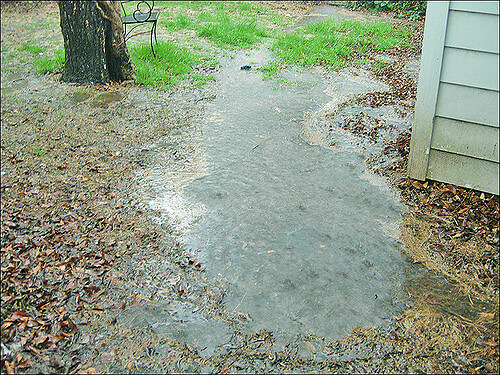
- Document the drainage problem on a wet day. Photograph standing water, trace the low spots with a level, and mark where water exits the lot today. If you can, run a quick hose test to confirm flow paths.
- Decide on the discharge and confirm permissions. If daylighting inside your property, pick a spot with at least 0.5 percent fall from the capture point and room for a dispersal bed. If tying to storm or a sump, confirm you have or can get the permit, and book the licensed contractor if needed.
- Call Ontario One Call, then stake the route. Keep your trench at least 600 mm off fences and property lines to avoid root mats and neighbour issues. Plan cleanouts at ends and at any change in direction.
- Excavate the trench 300 to 450 mm wide. Maintain a consistent slope, normally 1 percent if you can get it, 0.5 percent minimum if space is tight. In pure clay, go a bit deeper and consider a small dry well or relief pit at the end to smooth storm peaks.
- Place non‑woven geotextile in the trench, add 100 to 150 mm of clear stone, lay 100 mm perforated HDPE with a filter sock holes down, and backfill with clear stone to 75 to 100 mm below grade. Wrap the fabric over the top, then finish with topsoil or river rock. Install a pop‑up emitter or protected outlet if daylighting. Add accessible cleanout risers where planned.
A few field notes: in iron‑rich groundwater areas, a socked pipe slows ochre buildup; in heavy leaf zones, a catch basin at surface that drops into the French drain reduces the leaf load. Cleanouts save you later when you need to jet sediment. If you are tying into a sump, use a backwater check on the gravity side so a backed‑up storm lateral cannot surcharge the yard system.
Special cases: municipal drains and rural edges
Parts of London straddle older municipal drains governed by Ontario’s Drainage Act. If your property drains to a municipal drain or you live on the fringes near Middlesex County, work that changes how you outlet or that crosses a municipal drain corridor can trigger Drainage Act procedures. That is a different path than a standard City permit. Before you trench near a mapped municipal drain, check with the City’s drainage staff. They can tell you in a quick call whether your plan is routine or whether you need the drainage superintendent involved.
What to expect from drainage contractors in London, Ontario
There are good drainage contractors in London who specialize in backyard drainage and weeping tile work. The market splits into three types: landscape contractors focused on surface grading and French drains, waterproofing contractors who excavate down to footings to replace weeping tiles, and plumbing or site services contractors who can pull plumbing permits and make storm connections.
When you call for quotes, expect a range. For a straightforward backyard drainage London Ontario project — 15 to 30 metres of French drain with a daylight outlet — total costs often land in the 3,000 to 8,000 CAD range depending on access, depth, and surface restoration. Tying into a storm lateral with permits and a licensed plumber increases costs. Full exterior weeping tile replacement around a foundation with excavation, waterproofing membrane, and stone can range widely, from 20,000 CAD upward on tight urban lots.
Ask for three things in writing: the discharge plan, any permits they will obtain, and the restoration scope. If the plan relies on infiltration in clay, ask for a fallback overflow. If they plan to connect to storm, confirm that a plumbing permit and inspection are included. A one‑year workmanship warranty is common, and some offer longer on materials. Local references matter more than glossy photos, because soil and frost in London are not the same as in Southwestern Ontario sand belts.
Design details that prevent callbacks
Small choices add up to a robust system. In London’s typical backyards, I lean on a few standards:
Pipe sizing and layout. Use 100 mm perforated pipe for most French drains. For long runs over 30 metres or catchments that include multiple downspouts, consider 150 mm to reduce surcharge during cloudbursts. Keep bends gentle. If you must turn 90 degrees, build it from two 45s and place a cleanout at the corner.
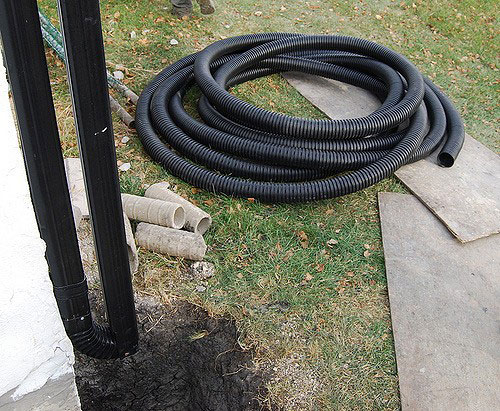
Stone and fabric. Use clear, washed stone such as 19 mm to 25 mm crushed, and a non‑woven geotextile rated for drainage, not a thin landscaping blanket. Wrap from below, leaving some slack so the fabric can move without tearing as the trench settles. On iron‑ochre prone sites, double up protection with a sock on the pipe and a properly overlapped fabric wrap.
Slope and elevation. Shoot elevations before you cut sod. Aim for 1 percent slope where you can. When space is tight and you can only get 0.5 percent, keep the trench bottom laser straight, avoid bellies, and place the outlet a hair higher than the lawn so a snow crust will not trap flow.
Cleanouts and access. Add a vertical riser with a cap at the high end of each run and after every 20 to 25 metres. In clays, I have used those ports every other spring to flush fines after the freeze‑thaw cycle.
Surface inlets. Where you see water ponding on hardscape, add a small catch basin that drops into the French drain. Choose grates you can clear with a boot in March slush. Surface inlets are also a safety valve if leaves overwhelm the turf intake.
Working with property lines and tight side yards
Side yards between houses in London’s newer subdivisions often measure 1.2 to 1.8 metres wide. Fences, air conditioners, and eaves outlets all occupy the same strip. A French drain here can help, but only if you respect the shared swale.
Before trenching, stand at the back fence and sight along the side yard. The low line you see is not an accident. Do not place your trench at the very bottom of that swale, or you risk robbing the neighbour’s side of drainage. Instead, offset it toward your wall by 300 to 400 mm, keep the top of stone below the swale invert, and ensure your lawn finish re‑creates the swale profile. Tie any downspouts into the system with solid pipe sections so you move roof water farther back or ahead without dumping it on the swale.
If the only reasonable outlet points toward the front yard near the sidewalk, do not run a pipe through the boulevard without City permission. Look for an internal outlet or a tie‑in to a sump with a pumped discharge that exits discretely onto your own lawn.
Winter behaviour and the first thaw
In January, most yard French drains go dormant when the top 150 to 200 mm freeze. The stone still buffers minor meltwater during chinooks, but most flow runs at the surface. The critical test comes in late February and March when daytime melt pushes water into trenches while nights re‑freeze outlets. To keep water moving:
- Keep emitter caps and surface grates clear of snow crusts.
- If you have a pump, test it mid‑winter. Pour a bucket into the sump, confirm the check valve closes, and listen for smooth operation.
- In problem springs, I have temporarily slipped a short section of flex hose onto a pop‑up emitter and laid it across a snowbank toward a lower garden bed. Once the thaw passes, the hose comes off and the turf recovers.
These small habits spare many calls in March when trades are booked and everyone wants the same fix.
Maintenance that actually gets done
A French drain without maintenance will slowly fill with fines, organics, and iron floc. Fortunately, small, regular actions keep it alive for years.
Open cleanouts after big storms and at the end of spring. A quick flush with a garden hose often dislodges the thin film that forms during thaw. Where iron bacteria is visible, a gentle jetting with a plumber’s hose works. Avoid harsh chemicals that can leach into lawns and gardens.
Rake or blow leaves away from surface inlets in October and November. If acorns or maple keys are a seasonal heavy load, consider swapping to a domed grate in fall, then back to a flatter grate for winter so shovels pass cleanly.
Walk the outlet zone twice a year. Settling around emitters is common in clay as stone consolidates. Top up depressions with soil and re‑sod to keep the lawn grade from turning the outlet into a birdbath.
Troubleshooting like a pro
If water still lingers after a new install, I work through a short mental flow:
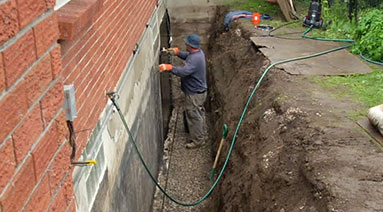
First, confirm slope with a level rather than the eye. A 10 mm hump over a 6 metre run can hold water.
Second, test the discharge. Pop the emitter, hose the line, and see if the outlet weeps freely. If not, snake the run from a cleanout toward the outlet to check for a crushed section.
Third, check for unexpected inflow. A neighbour’s downspout inadvertently cut into the drain can overwhelm capacity during cloudbursts. Surface inlets without leaf screens can do the same in fall.
Fourth, reassess the catchment. A French drain sized for a 50 square metre lawn behaves differently if the patio is extended and now adds another 30 square metres of hard surface.
In most cases, a stuck emitter cap, a leaf clog at a grate, or a slight high spot explains the symptom. The hard cases are perched springs in the subsoil, which demand either a deeper relief drain with a reliable winter outlet, or a small pumped system.
A note on costs and realistic expectations
Numbers help frame decisions. In London, a modest French drain along one side of a backyard, 12 to 18 metres long with a pop‑up emitter and stone backfill, often runs 2,500 to 5,000 CAD with sod repair. Add a surface basin or two and a short dry well, and you might see 4,000 to 7,500 CAD.
Where the design requires a new sump pit, pump, and a permitted storm connection, expect 6,000 to 12,000 CAD depending on distances and finishes. Exterior weeping tile replacement against a foundation, including excavation to the footing, membrane, new tile, stone, and backfill, starts much higher and varies with access and wall length.
Material choices shift costs, but access and restoration drive them more. A straight trench across open lawn costs half of the same trench that crosses a deck, pavers, and mature plantings.
Bringing it together for London properties
French drains solve common problems in London’s clay, but success rests on a few local truths: water needs a reliable place to go in winter, you cannot export your problem across a property line, and touching the storm system turns yard work into plumbing. A small amount of upfront homework avoids mid‑project surprises. Get your utility locates, confirm whether your discharge point needs a permit, respect swales and lot grading, and design for access so you can maintain the system without a shovel each spring.
If the scope stretches beyond your comfort, call two or three drainage contractors London Ontario homeowners trust and listen for specifics in their proposals. The best bids will name the discharge strategy, the permit path if required, and the exact materials they plan to bury in your yard. That clarity, more than anything, separates a drain that works the first March and the tenth from one that seems fine in July and fails when you need it most.
For those dealing with damp basements and aging clay tiles, search for weeping tiles London Ontario specialists who can speak to both code and soil. For soggy lawns and spongy side yards, look for backyard drainage London Ontario https://garrettrfdu470.iamarrows.com/preventing-wet-basements-in-london-ontario-expert-tips crews with cleanout‑friendly designs and a plan for winter outlets. Whether you call them French drains or something plainer, the right system, installed once and documented, will quietly earn its keep for years.
Ashworth Drainage — Business Info (NAP)
Name: Ashworth DrainageAddress: 514 Hale St, London, ON N5W 1G8
Phone: (519) 660-9375
Website: https://www.ashworthdrainage.ca/
Email: [email protected]
Hours:
Monday: 9:00 AM – 5:00 PM
Tuesday: 9:00 AM – 5:00 PM
Wednesday: 9:00 AM – 5:00 PM
Thursday: 9:00 AM – 5:00 PM
Friday: 9:00 AM – 5:00 PM
Saturday: Closed
Sunday: Closed
Open-location code (Plus Code): XRR3+HV London, Ontario
Map/listing URL: https://maps.app.goo.gl/9kaoXAxRtJRP1ThS9
Embed iframe:
Socials (canonical https URLs):
Facebook: https://www.facebook.com/ashworthdrainage/
X: https://twitter.com/ashworthrules
Instagram: https://www.instagram.com/ashworthdrainage/
https://www.ashworthdrainage.ca/
Ashworth Drainage provides basement waterproofing and foundation repair services in London, Ontario and surrounding areas in Southwestern Ontario.
The company helps homeowners address wet basements, water intrusion, and drainage issues with solutions that fit the property’s conditions.
Service requests can include foundation repair, waterproofing options, sump pump and drainage-related work, and related assessments.
Ashworth Drainage is based at 514 Hale St, London, ON N5W 1G8.
To reach the team, call (519) 660-9375 or email [email protected].
Business hours are Monday to Friday 9:00 AM–5:00 PM, with the office closed Saturday and Sunday.
For directions and listing details, use the map listing: https://maps.app.goo.gl/9kaoXAxRtJRP1ThS9.
Popular Questions About Ashworth Drainage
What does basement waterproofing help prevent?Basement waterproofing is intended to reduce water intrusion and moisture problems that can lead to dampness, leaks, odors, and damage over time.
How do I know if I may need foundation repair?
Common signs can include visible cracks, water seepage, shifting or uneven areas, or recurring moisture problems; an on-site assessment is usually the best way to confirm causes and options.
What areas does Ashworth Drainage serve?
Ashworth Drainage serves London, Ontario and surrounding areas in Southwestern Ontario.
What are Ashworth Drainage’s hours?
Monday–Friday 9:00 AM–5:00 PM; Saturday closed; Sunday closed.
How can I contact Ashworth Drainage?
Phone: +1-519-660-9375
Email: [email protected]
Website: https://www.ashworthdrainage.ca/
Map: https://maps.app.goo.gl/9kaoXAxRtJRP1ThS9
Facebook: https://www.facebook.com/ashworthdrainage/
X: https://twitter.com/ashworthrules
Instagram: https://www.instagram.com/ashworthdrainage/
Landmarks Near London, ON
1) Kiwanis Park2) Western Fair District
3) Covent Garden Market
4) Victoria Park
5) Budweiser Gardens
6) Museum London
7) Fanshawe Conservation Area