Foundation Repair London Ontario: Soil Conditions, Settlement, and Solutions
London sits on a complex patchwork of glacial till, clay, silt, and pockets of sand shaped by the Thames River system. That geology, combined with a climate that swings from freeze to thaw and sees a full year’s worth of moisture, sets the stage for foundation movement and water intrusion. If you own a home here, you will eventually notice a stair step crack, a corner that settles, or a basement wall that seeps after a long rain. The trick is knowing what the soil is doing, why the structure is reacting, and which solution fits the problem rather than making it worse.
This guide draws on field experience in Southwestern Ontario basements and crawlspaces, from Old South to Masonville and out to the county. It is written for homeowners who want clear reasoning, not guesswork. The focus is practical: what we see under London homes, how to diagnose the cause, and how to choose durable fixes for both foundation repair and basement waterproofing.
What London’s soils mean for your foundation
Two blocks apart, you can have very different ground conditions. Glacial till dominates much of the city, but it often transitions to finer clays near waterways and low points. Those clays act like a sponge. When saturated, they swell and push laterally on basement walls. When they dry, they shrink and leave voids under footings. Add a high water table in certain neighbourhoods and you get a regular cycle of hydrostatic pressure on walls and slabs.
Sand and silt lenses create another problem. They drain fast, so water moves laterally through them, loading certain sections of a wall while leaving others dry. That uneven pressure shows up as isolated bowing or a crack that opens near a downspout discharge.
Frost depth in this part of Ontario typically drives footings to about 1.2 metres below grade. Homes that have shallow additions or old porch footings often heave in winter, then relax in spring, which telegraphs as diagonal cracks at the junction between original structure and addition. If you see repeated seasonal movement in the same spot, suspect shallow bearing or poor backfill rather than a mysterious structural failure.
How settlement appears in London homes
Settlement in our city is rarely uniform. More commonly, one corner sinks or the center of a slab drops a few millimetres over a few years. Early signals show up inside the house long before anything dramatic happens outside. Doors rub at the top latch side. Baseboards separate at corners. Ceramic tile grout lines widen in a taper. These are not proofs on their own, but patterns matter.
Outside, watch the step pattern in cracks on concrete block foundations. The crack usually climbs up the mortar joints then switches direction toward the corner. If you can slide a coin into that crack and it keeps widening over months, you likely have active movement and not just an old cosmetic blemish. On poured concrete walls, vertical cracks that start narrow and open toward the top hint at settlement or shrinkage stress, while horizontal cracks mid wall suggest lateral soil pressure and bowing.
With wet basements, I often trace the stain line to the first mortar joint above the slab. That is a clue the wall is wicking moisture rather than admitting bulk water through a single hole. If the basement leaks where the floor meets the wall after long rain, the footing drains are suspect. When a single hairline crack weeps during a short storm, the crack is the driver rather than the drainage system.
Why age and construction type matter
London’s post war bungalows frequently sit on block foundations, some still using original clay weeping tiles. Those tiles collapse over time, and tree roots love them. I have excavated perimeters where the weeping tile was simply gone for entire runs. The basement would not leak in a summer thunderstorm, then slowly seep for three days after a steady fall rain. Once we replaced the tile with perforated PVC, added proper stone and filter fabric, and tied into a reliable sump system, the wall dried and stayed dry. The lesson is that a wall can be fundamentally sound yet soaked because the drainage path failed.
Homes from the 1970s and 1980s move toward poured concrete foundations. They tend to crack cleanly and are good candidates for targeted crack injection when isolated leaks appear. Some split level homes from this era have shallow lower level footings next to deeper original footings. Where the soils switch, differential settlement shows up at the transition. You fix those with spot underpinning or piers, not with patching plaster.
Newer infill builds often have better damp proofing but still depend on site grading and downspout management. I have seen pristine membranes on the wall with saturated backfill because the lot grading was reversed toward the house. In those cases, reshaping the top 150 millimetres of soil and moving downspouts 2 to 3 metres away solved a problem that no amount of interior drainage would address alone.
Diagnosis before decisions
Sound diagnosis begins with simple tools. A laser level or zip level shows relative elevations so you can map settlement across a floor. Crack monitors track movement over weeks to separate active issues from static ones. A moisture meter or calcium chloride test tells you if the slab is emitting vapor or if water is entering at a joint. On the exterior, a soil probe reveals if the backfill is dense or loose and whether there is stone around the footing tile.
Do not skip the roof and gutters. Every litre of water you keep out of the backfill reduces pressure on the wall. A 100 square metre roof in a 25 millimetre rain sheds 2,500 litres of water. If your downspouts dump that at the foundation, the soil will respond.
When a wall bows, look for the push zone. On block walls, a horizontal crack about a third of the way down from the top is a classic sign of lateral load. Carbon fibre straps or steel beams can restrain further movement if the bow is within a small range, often under about an inch. Beyond that, excavation and relief of the load become part of the plan.
Before any dig, call Ontario One Call for locates. If you plan structural underpinning or significant wall reinforcement, check with the City of London about permits. Electrical supply for a sump requires a properly wired outlet, and a battery backup on the pump is not a luxury during a summer storm.
Water management the local way
Basement waterproofing in London Ontario tends to split into two paths, interior and exterior, each with a role. An interior perimeter drain with a sump relieves hydrostatic pressure under the slab and at the cove joint. It is fast to install, effective for chronic seepage, and it does not require disturbing gardens or driveways. It does not, however, keep the wall itself dry. If your block wall is taking on water and deteriorating, exterior work that dampproofs or waterproofs the wall and replaces the weeping tile provides a truer long term fix.
Older homes often lack a sump. Adding one changes the moisture dynamic of the entire basement. I prefer a deep basin with a sealed lid that accepts the interior drain and any dedicated lines from window wells. A reliable primary pump matched to the head height, plus a battery backup, avoids the heart sinking moment when the power blinks and water rises. Tie the discharge to solid pipe and get it out to daylight well away from the foundation. In winter, make sure the line does not freeze at the outlet.
Crack injection is useful in poured walls for single leak points. Polyurethane expands, so it seals a wet, moving crack. Epoxy is structural and works when you need to restore the section strength in a stable, dry crack. Both require proper surface prep and ports that span the full thickness of the wall. On block, surface coatings are temporary. If the wall leaks at joints along a stretch, think drainage and exterior membranes, not just paint.
Common repair strategies and where they shine
Choosing methods is not about brand names. It is about matching cause to cure. The following set helps homeowners weigh options quickly without getting lost in jargon.
- Targeted crack injection, best for single or few leaks in poured concrete walls, when the wall is otherwise sound and drainage is adequate. Polyurethane is preferred for active leaks. Epoxy suits structural cracks that need bond strength.
- Interior perimeter drainage with sump, best for widespread seepage at the cove joint or through porous block, and when exterior access is limited by property lines or mature landscaping. Pair with a dehumidifier for summer moisture.
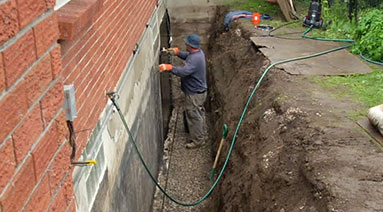
- Exterior excavation, waterproofing membrane, and weeping tile replacement, best for deteriorating block walls, high water tables pressing on the wall, or failed clay tile. Include proper stone envelope and filter fabric to keep fines out.
- Structural stabilization, best for bowing or leaning walls within correct deflection ranges. Carbon fibre straps keep a wall from moving further when caught early. Steel I beams add greater stiffness for moderate deflection. Severe cases call for excavation, straightening, and rebuilding support.
- Underpinning and helical or push piers, best when a section of the foundation settles due to poor bearing soil or seasonal shrink swell. Piers transfer load to deeper, competent strata. Underpinning enlarges the bearing at the footing and can be staged to control movement.
What it costs, and what you get for the money
Pricing varies with access, depth, and scope. In London, ballpark ranges in Canadian dollars help frame decisions. A single polyurethane crack injection in a poured wall might run 450 to 900 depending on length and accessibility, with epoxy often higher. An interior perimeter drain with a sump typically falls between 70 and 120 per linear foot, with total project costs ranging widely by basement size and obstacles like HVAC or finished walls.
Exterior excavation and full waterproofing usually land between 200 and 400 per linear foot once you include stone, fabric, new 4 inch perforated PVC weeping tile, and a proper membrane. Add more if walkways, decks, or mature trees complicate the dig. Structural stabilization costs span a wide range. Carbon fibre straps are often the most economical when suitable. Steel beams add material and installation time. Piers, whether helical or push, may range from roughly 2,500 to 4,500 per pier, and the engineering often calls for several at a corner or along a settling wall.
There is no sense spending money on interior drains if the real issue is footing settlement at one corner, just as there is no point in underpinning a wall that is bowing from lateral soil pressure. Expect a reputable contractor to explain how the test data and observations point to the chosen method. Good work should include a written scope, materials list, and warranty terms that match the component. I take lifetime warranties on properly installed modern waterproofing membranes seriously. Pumps and mechanicals carry more finite timelines and should be treated as such.
The physics behind clay, frost, and hydrostatic pressure
Clay minerals, especially those with high plasticity, expand as they absorb water into their structure. That expansion applies lateral force to basement walls. In London’s climate, fall rains saturate clay-rich backfill right before winter sets in, and frost lenses can form within that saturated zone. The lenses lift soil where moisture collects, which explains why shallow porch footings heave while deeper house footings remain stable. Come spring, thawed water has to go somewhere. If the footing drains are clogged or absent, water builds hydrostatic pressure against the wall. The path of least resistance is through mortar joints or cracks. Your goal with drainage and waterproofing is to lower the head pressure and give water a controlled route away from the structure.
Sand behaves differently. It does not expand, but it transmits water readily. Where a sand lens contacts a wall, it can funnel significant volumes of water to a small area during storms. That spiky loading shows up as an isolated seep or localized bow. Exterior detailing at those zones has an outsized payoff relative to the rest of the wall.
A tale from Old South
A brick bungalow near Wortley Village had a persistent musty smell every August and a visible seep along the north wall every November. The owner had painted the interior block three times in ten years. Each coat looked crisp for a season, then the paint blistered. Inside, a new laminate floor stayed cupped, and a cold room collected efflorescence. We used a moisture meter over a month and saw levels spike after multi day rain, not during quick storms. Outside, excavation revealed broken clay weeping tiles that stopped entirely at the corner, plus backfill with almost no stone.
Rather than install an interior drain alone, the owner chose full exterior waterproofing on the north and west sides, with new perforated PVC weeping tile bedded in three quarters clear stone and wrapped in filter fabric. We added a cleanout for the tile, tied it to a sump inside, and extended downspouts to throw water well away. The smell left within two weeks, wall readings stabilized, and the paint stopped peeling because the wall was finally dry through its thickness. The case underscored a simple point. Sometimes the right repair takes a shovel, not a roller.
When a pier is worth it
A two storey home in north London showed progressive diagonal cracks above the front window and a separable baseboard joint near the foyer. A laser level found a 12 millimetre drop over six metres from the rear of the house to the front right corner. The soils report showed a compressible silt layer at shallow depth near the front. Interior drains would have done nothing. We installed helical piles at the corner and along the adjacent wall, then bracketed the footing. Lifting was partial by plan to avoid stressing the brick veneer, about half of the total drop. New movement stopped, the doors swung clean again, and the homeowner avoided future brick cracking. Piers are not cheap, but when bearing is the problem, they are the correct tool.
Permits, bylaws, and safety in London
Structural changes such as underpinning, installing beams against a bowing wall, or adding new egress windows often trigger permit requirements. The City of London’s building division can clarify what needs drawings or engineering. If you live near a regulated watercourse, local conservation authorities may have setback rules that affect exterior work. Before any dig, book utility locates through Ontario One Call. For sump installations, use a dedicated electrical circuit with a properly installed GFCI where required. Where a discharge line crosses a sidewalk easement, plan for freeze protection and routing that does not create an ice hazard.
Managing a wet basement London Ontario homeowners can trust
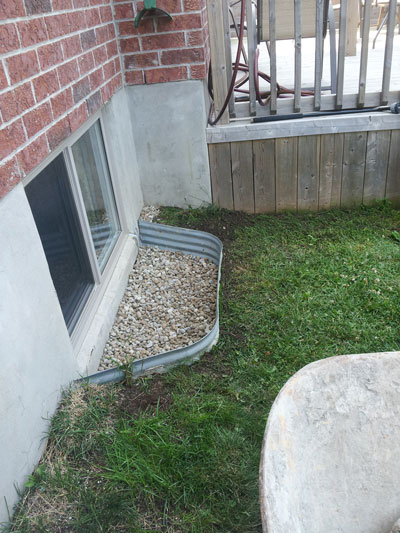
The phrase wet basement London Ontario shows up in service calls all winter and spring. Address it in layers. Start outside. Grade the soil so it falls away from the house at least 10 millimetres per 300 millimetres for the first two metres. Keep downspouts discharging well away from the foundation and clear the gutters. If those steps do not resolve the issue, examine window wells for proper drains. Next, evaluate whether specific crack injection or a larger drainage approach makes sense. If you live in an older home with clay tile or no tile, weigh the long term benefit of new exterior weeping tile and a waterproofing membrane.
Some homeowners hope a single miracle coating will cure everything. Coatings have a place as part of a system, especially on the exterior where they can be protected by drainage board. Inside, coatings are cosmetic unless you relieve water pressure. Be wary of anyone who prescribes the same product for every house regardless of soil and structure.
How to choose a contractor for foundation repair London Ontario
Experience with local soils matters as much as technical skill. Ask where they have worked in your neighbourhood and what they found under those homes. Look for a diagnosis that ties symptoms to causes you can understand. When a company provides basement waterproofing London Ontario services, ask what portion of their work is interior drains versus exterior excavation. Balanced firms can explain the tradeoffs rather than pushing a one size system.
Good documentation includes a drawing of the planned work, notes on tie ins to existing drainage, and specs for materials like membrane type, thickness, and stone gradation. For structural work, ask who provides engineering and what monitoring occurs during and after the repair. References should include projects that are at least a year old so you can ask how the fix performed through a winter and spring.
A short homeowner triage checklist
https://pastelink.net/mqvsc7ol- Track cracks with a pencil line and date, and recheck monthly to see if they change or stay stable.
- Use a level to map floors after you notice sticky doors or window binding, then repeat after a season.
- After rain, walk the perimeter and note where water accumulates or where downspouts discharge.
- Pull back insulation on a basement wall in one spot and check for dampness behind it.
- Photograph stains and efflorescence so you can compare after any change in grading or drainage.
Maintenance that protects your investment
Even the best repair needs help from routine care. Clean gutters twice a year. Confirm downspout extensions remain attached and are not crushed by lawn traffic. Test the sump pump before the rainy season by filling the basin and verifying both primary and backup pumps run. If your exterior system includes cleanouts for the weeping tile, flush them periodically to keep fines from accumulating. Inside, use a dehumidifier in summer to keep relative humidity near 50 percent. Low humidity reduces musty odours and slows any residual vapor transmission through the slab.
Keep an eye on landscaping. Newly added soil against the house can trap moisture high on the wall. Mulch builds up over time and can defeat the original grading. Avoid deep rooted trees next to the foundation. Roots can invade old clay tiles and even shift soils as they grow and shrink seasonally.
Balancing cost, disruption, and durability
Every option carries tradeoffs. Interior drainage is less disruptive and often more affordable, yet it leaves the exterior wall subject to wetting. Exterior waterproofing addresses the cause at the soil interface, but it is invasive and more expensive, particularly where access is tight. Structural stabilization with carbon fibre is elegant when the numbers fit, but it is not a rescue for a severely bowed wall. Piers resolve settlement decisively at a cost and with some risk of cosmetic impact if lifts are aggressive. A seasoned contractor will lay out these balances openly.
If you are selling a home, buyers look closely at water and foundation issues. A documented, transferable warranty on a recognized system adds confidence. Quick cosmetic fixes invite second looks and renegotiations after inspections. When you plan to stay, choose repairs that lower the chance of repeat work: proper drainage, sound structural support, and materials with proven performance in our soils.
Final thoughts from the field
Foundations do not fail overnight. They whisper long before they shout. A few hours of careful observation and a clear plan can save months of worry and thousands of dollars. When you approach foundation repair London Ontario problems with local soil knowledge, measured diagnostics, and matched solutions, you get durable results. For basement waterproofing, think in systems rather than products. For settlement, think in loads and soils rather than caulk and patch.
If you are unsure where to start, begin with grading and water control. Document changes. If issues persist, bring in a professional who knows our neighbourhoods and can explain not just what they recommend but why. Homes in London stay solid when we respect the ground they sit on and choose repairs that work with, not against, the soil beneath them.
Ashworth Drainage — Business Info (NAP)
Name: Ashworth DrainageAddress: 514 Hale St, London, ON N5W 1G8
Phone: (519) 660-9375
Website: https://www.ashworthdrainage.ca/
Email: [email protected]
Hours:
Monday: 9:00 AM – 5:00 PM
Tuesday: 9:00 AM – 5:00 PM
Wednesday: 9:00 AM – 5:00 PM
Thursday: 9:00 AM – 5:00 PM
Friday: 9:00 AM – 5:00 PM
Saturday: Closed
Sunday: Closed
Open-location code (Plus Code): XRR3+HV London, Ontario
Map/listing URL: https://maps.app.goo.gl/9kaoXAxRtJRP1ThS9
Embed iframe:
Socials (canonical https URLs):
Facebook: https://www.facebook.com/ashworthdrainage/
X: https://twitter.com/ashworthrules
Instagram: https://www.instagram.com/ashworthdrainage/
https://www.ashworthdrainage.ca/
Ashworth Drainage provides basement waterproofing and foundation repair services in London, Ontario and surrounding areas in Southwestern Ontario.
The company helps homeowners address wet basements, water intrusion, and drainage issues with solutions that fit the property’s conditions.
Service requests can include foundation repair, waterproofing options, sump pump and drainage-related work, and related assessments.
Ashworth Drainage is based at 514 Hale St, London, ON N5W 1G8.
To reach the team, call (519) 660-9375 or email [email protected].
Business hours are Monday to Friday 9:00 AM–5:00 PM, with the office closed Saturday and Sunday.
For directions and listing details, use the map listing: https://maps.app.goo.gl/9kaoXAxRtJRP1ThS9.
Popular Questions About Ashworth Drainage
What does basement waterproofing help prevent?Basement waterproofing is intended to reduce water intrusion and moisture problems that can lead to dampness, leaks, odors, and damage over time.
How do I know if I may need foundation repair?
Common signs can include visible cracks, water seepage, shifting or uneven areas, or recurring moisture problems; an on-site assessment is usually the best way to confirm causes and options.
What areas does Ashworth Drainage serve?
Ashworth Drainage serves London, Ontario and surrounding areas in Southwestern Ontario.
What are Ashworth Drainage’s hours?
Monday–Friday 9:00 AM–5:00 PM; Saturday closed; Sunday closed.
How can I contact Ashworth Drainage?
Phone: +1-519-660-9375
Email: [email protected]
Website: https://www.ashworthdrainage.ca/
Map: https://maps.app.goo.gl/9kaoXAxRtJRP1ThS9
Facebook: https://www.facebook.com/ashworthdrainage/
X: https://twitter.com/ashworthrules
Instagram: https://www.instagram.com/ashworthdrainage/
Landmarks Near London, ON
1) Kiwanis Park2) Western Fair District
3) Covent Garden Market
4) Victoria Park
5) Budweiser Gardens
6) Museum London
7) Fanshawe Conservation Area