Cost of French Drains in London, Ontario: What to Expect in 2026
Water always finds the weak point. In London, Ontario, that often means saturated backyards in spring, musty basements after a heavy thaw, and clay soils that hold moisture against foundation walls. By the time a homeowner starts searching for french drains in London, Ontario, or calls drainage contractors in London, Ontario, the problem has usually become persistent. The natural next question is cost. What does it take in 2026 to fix drainage properly, and what drives the number up or down?
Below is a grounded look at current price ranges, how London’s soil and climate shape design choices, and the line items that turn an estimate into a real-world invoice. I’ll draw on what crews here actually encounter: tight side yards in Old North, deep footings in newer subdivisions north of Fanshawe Park Road, mature trees in Wortley Village, and the usual surprise of finding utilities where the as-builts said they were not.
What a French drain is, and what London calls it
On a yard project, a French drain is a buried trench with a perforated pipe wrapped in filter fabric and surrounded by clear stone. It collects groundwater and reroutes it to a safe discharge point, often a sump, a storm connection, or a daylight outlet where the grade allows.
Around foundations, London trades still use the term weeping tiles. Modern weeping tiles are perforated plastic pipe installed at footing level, paired with a waterproofing membrane and drainage board. You will see both terms in quotes on estimates: french drains for open-yard collection runs and weeping tiles London Ontario for foundation-specific work.
One system deals with soggy lawns and surface infiltration. The other relieves hydrostatic pressure at the foundation. Costs and construction methods differ, so I will split pricing accordingly.
2026 price snapshot in London, Ontario
All figures are Canadian dollars and assume typical site conditions. Lengths are linear feet of trench or interior channel. Taxes, permits, and restoration can shift totals.
| Scope | Typical 2026 price per linear foot | Common project totals | | --- | --- | --- | | Backyard French drain, 4 to 6 inch pipe, 18 to 24 inch depth, fabric wrap, daylight or sump tie-in | 55 to 95 | 3,500 to 9,000 | | Curtain or interceptor drain upslope of home, deeper cut, heavier stone | 70 to 120 | 4,500 to 12,000 | | Interior perimeter drain with sump pump, 4 to 6 inch channel at slab edge, new discharge | 90 to 140 | 6,500 to 18,000 | | Exterior foundation weeping tile replacement with membrane and dimple board, down to footing | 190 to 320 | 14,000 to 40,000+ | | Spot drain or drywell for a single low area, shallow trench, small basin | 1,500 to 4,000 | 1,500 to 4,000 |
Those ranges reflect 2026 labour and material prices in southwestern Ontario, including the cost of washed stone, filter fabrics rated for our clay loams, perforated PVC or HDPE pipe, and proper disposal of wet excavated spoil. Exterior foundation work is the priciest because it involves deep excavation, shoring or safe trench walls, waterproofing, and full-height restoration.
Why London’s ground conditions matter
London sits on a mix of heavy clay and silt loam. Clay holds water. When the frost comes, that moisture expands and can push against the foundation. After a thaw or prolonged rain, water takes the easiest path along the top of clay layers and into low spots. That has three practical consequences for design and cost.
First, drains must stay clean. Clay fines can clog a system that is not properly wrapped. A good install uses non-woven geotextile around the stone envelope, not just a sock over the pipe. The https://elliotwjfy463.wpsuo.com/foundation-repair-london-ontario-soil-conditions-settlement-and-solutions fabric spec needs to balance flow with filtration, usually a 4 to 8 oz non-woven in our soils.
Second, depth and slope drive excavation time. You need consistent fall to the outlet. On a flat Masonville lot, getting 1 percent slope can mean deeper cuts or a sump tie-in rather than a gravity daylighter. Deeper cuts mean more shoring and more stone, which means higher cost.
Third, restoration is not an afterthought. The moment you cut through a mature lawn or an interlock walkway, the budget has to make room for putting it back in a way that does not sink next spring. In our freeze-thaw cycles, that means compacted lifts and often more base material than you think.
What you are paying for, line by line
Labour is the big driver. A three-person crew with a mini excavator and a tandem dump truck runs a high daily cost in 2026, and tight sites slow production. Washed stone has climbed in price, especially 3/4 clear, and disposal of wet spoil is not free. Add geotextile, pipe, basin hardware, a sump system where used, and the numbers add up.
Permitting and locates matter too. Ontario One Call utility locates are mandatory and free, but scheduling can add a week or two. A building permit may be required for some interior drainage or exterior foundation waterproofing. It depends on scope. Always have your contractor confirm with the City of London Building division before work starts.
Basement drains also need a reliable discharge. If there is no legal storm connection, the discharge goes to a sump with an exterior outlet that carries water to grade well away from the home. That requires drilling through the rim joist or foundation wall, installing a check valve, heat tracing in some cases, and protecting the outlet line from winter freeze. Those details take time and material.
Backyard drainage in London: when it solves the problem, and what it costs
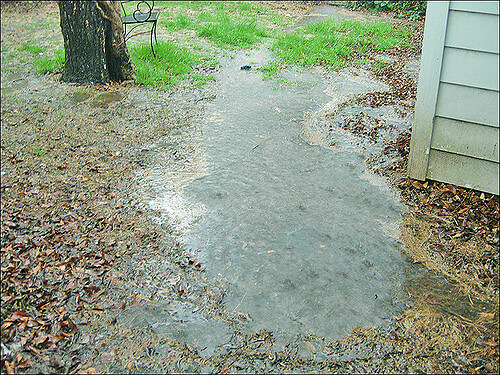
A well-built French drain is ideal for a lawn that turns to muck in shoulder seasons, a side yard that traps roof runoff between houses, or a lot where the neighbour’s grading sends water your way. The trench sits upslope of the low spot, intercepts shallow subsurface flow, and carries it to a lower outlet.
The common setup here uses a 6 inch perforated pipe set in 12 to 18 inches of 3/4 clear stone, all wrapped in a non-woven geotextile. The trench is typically 18 to 24 inches deep. If you only go 12 inches in our clays, the drain takes longer to start working and clogs more easily. A shallow collector for downspouts can feed into the same stone trench with a solid pipe run.
In 2026, homeowners are seeing quotes of 55 to 95 per linear foot for standard yard drains with straightforward access. The lower end fits open backyards with easy spoil hauling and daylight discharge. The high end covers tight access where wheelbarrows replace machines, or where the drain needs to wind around trees with careful hand digging to protect roots. Add 1,500 to 3,000 if a sump basin and pump are needed for discharge.
A short anecdote from a spring job near White Oaks: a 60 foot interceptor installed upslope of a patio turned a lawn that squished underfoot into something you could mow a day after rain. That one used a small basin on the low corner, and the discharge tucked into a landscaped swale to keep water moving away. The total was just over 5,000, including re-sodding a 200 square foot area and resetting 40 feet of edging.
Interior perimeter drains and sump systems
If the basement is getting damp where the slab meets the wall, or if there is efflorescence on the lower part of the foundation, an interior drain can do two useful things: collect water that has made it through the wall and relieve pressure at the cove joint. The system is cut into the slab’s edge, usually 6 to 12 inches wide, then a perforated pipe and clean stone sit beside the footing and drain into a sump basin.
Expect 90 to 140 per linear foot in 2026 for interior perimeter drains in London, excluding major obstructions. Obstructions drive cost quickly. Finished basements demand careful protection and extra time to remove and replace sections of drywall, trim, and sometimes built-ins. Structural considerations, like preserving enough slab edge and not undermining footings, matter more in older homes with shallower foundations.
A quality sump setup here includes a sealed basin with an airtight lid, a primary pump sized for the head height to the discharge, a check valve, an exterior discharge line that exits above grade and slopes away, and ideally a battery backup pump. With inflation and supply chain costs baked in, a robust two-pump package often adds 1,800 to 3,500 to the project. If power outages are frequent in your part of the city, the backup earns its keep the first spring storm.
Exterior weeping tiles: the big-ticket fix
When the foundation is leaking through cracks or the original clay or concrete tile has collapsed, the long-term fix is on the outside. Crews excavate to the footing, clean the wall, patch or inject cracks as needed, apply a liquid membrane, add a dimple drainage board, and install new perforated pipe at footing level with clean stone. The pipe exits to a sump or a legal storm connection, and everything gets backfilled and compacted.
This scope in London sits between 190 and 320 per linear foot in 2026. The spread is wide for good reason. Depth to footing ranges from 5 to 9 feet in our area. Every extra foot of depth ups the risk and slows production. Many properties need trench boxes or sloped cutbacks for safety, and tight side yards may require hand work or smaller equipment. Downspout reconnections, window well drains, and egress compliance can each add a few hundred dollars per item.
Restoration is often the surprise. Replacing the weeping tile on a 70 foot run along a driveway with asphalt or interlock can add 3,000 to 10,000 in restoration alone. Concrete porches that bear partially on the excavated zone need shoring and can add significant labour. Mature shrubs rarely survive a deep dig. Budget accordingly.
Here is a real pattern I have seen: homes from the 1950s to 1970s in Old South with original clay tiles, unprotected parging, and poor grading often leak at the cold joint where the floor meets the wall. Owners sometimes try interior drains first because the price is gentler and there is no digging outside. If wall seepage is widespread or mortar joints are deteriorated, that interior channel will manage the symptom, not the cause. A proper exterior system quiets the wall, but it is a bigger bite financially.
How contractors estimate length and depth
For yard drains, length is the actual trench run including bends and any manifold connections from downspouts. For foundation drains, length is the perimeter wall being addressed, not the total perimeter unless the job is full wrap. Depth is measured to the pipe invert. In London’s north end, new builds often have deeper footings, which increases both excavation and stone quantity.
Crews also count access moves. If a mini excavator cannot get through a fence or has to ramp over a deck ledger line, productivity drops and the estimate reflects that. A lot with enough side yard for a 60 inch machine keeps costs down. Where access is only 36 inches, budget more for hand excavation and wheelbarrows.
Permits, by-laws, and storm connections
Drainage work touches several rules. The Ontario Building Code and City of London by-laws govern what can connect to storm infrastructure and when a permit is required. Discharging a sump to the sanitary system is not allowed. Discharge to grade needs to avoid icing sidewalks and neighbour impacts.
Programs change, and municipalities update rules. Before you plan a tie-in to anything municipal, ask your contractor to confirm the latest from the City of London and to coordinate with Development and Compliance Services if needed. If a building permit is required for interior drains or exterior waterproofing, your contractor should include the fee and management in the estimate. Always call Ontario One Call before any dig. Your contractor should handle that, but homeowners planning to do any part of the work themselves still need locates.
Material choices that stand up in clay
Yard drains work best in our soils when the stone envelope is generous. I prefer 12 inches of stone around the pipe, not the skinny 6 inch stripe that some budgets favor. The fabric needs to wrap the stone package completely, with overlaps that face away from flow. In clay, a lighter woven fabric tends to blind off; non-woven is the safer choice.
For pipe, both perforated PVC and corrugated HDPE show up on jobs here. Corrugated installs faster in curves but can deform under point load. PVC Schedule 35 or SDR 28 holds grade and is easier to jet if needed later. On foundation drains, rigid pipe makes service easier. If the quote is silent on pipe type, ask.
Sumps deserve a moment. A reliable system uses a basin deep enough to catch perimeter flow without short cycling, a pump with a rated capacity at your actual head height, and a discharge line protected from freeze. A 1 1/2 inch line trapped in cold shade on the north side can ice up in February. Heat trace and insulation are cheap insurance compared to a midwinter flood.
What restoration really costs
I have opened budgets that set 500 aside for restoration on a 90 foot run. That number always grows. When the trench crosses lawn, you need topsoil and sod. Sod in 2026 runs 0.60 to 0.85 per square foot installed. Interlock lifted and reset usually pencils out at 18 to 30 per square foot if the base is saturated and needs rebuilding. Asphalt patching is cheaper per square foot but more fussy to blend. Concrete cutting and replacement adds dust control and formwork time.
Expect that wet clay fill will not compact well the same day. Crews who rush backfill to meet a date often leave a trench that settles six months later. Good practice is to compact in lifts and slightly overfill, then return for a final grade touch-up once the trench has had time to relax. If your estimate does not include a follow-up visit for settlement, ask what that looks like.
Two quick cost drivers to check during a site walk
- How will you discharge the water legally and reliably, and what does that path look like in winter?
- What surfaces or plantings are in the trench path, and what is the plan to restore them without future settling?
Those two questions alone have shifted estimates by thousands on jobs I have priced. A neat solution for discharge can keep the system working through cold snaps. An honest restoration plan avoids a second project next spring.
Timing and seasonality in London
Most drainage contractors in London book spring and early summer solid within weeks. If you can schedule late summer into early fall, you often get drier ground, better compaction, and fewer weather delays. Winter work is possible for interior drains and sometimes exterior on milder weeks, but frost complicates excavation and restoration. Pricing in 2026 includes crews’ winter premiums on cold weeks, so timing can affect cost.
Plan around lead times for locates and, for sump discharges, electrical work if a dedicated receptacle on a GFCI is required. Electricians have been busy with heat pump and EV charger installs, and a small job may need a bit of notice.
Case sketches from typical London properties
A two-storey in Westmount with a wet side yard: 45 feet of 6 inch French drain along the fence line, 18 inches deep, stone wrapped in non-woven, one cleanout, daylight discharge to the front. Access through a 5 foot gate, minimal hardscape. 2026 price landed at 3,400 including sod and topsoil, plus HST.
A 1960s bungalow in Old North with cove joint seepage on two walls: 85 feet of interior perimeter drain, new 24 inch sump basin with primary and battery backup pump, discharge line to the east wall with insulated outlet. Finished basement required protection and reinstallation of baseboards on one wall. Total 11,600, including patching and new flooring transitions along the sawcut edge.
A 1980s two-storey in Masonville with failed exterior tile on the north wall: 70 feet of exterior excavation to 8 feet, new membrane and dimple board, rigid perforated pipe with clear stone, two window well drains, downspout reconnection with solid pipe to the front. Interlock walkway removed and reinstalled with new base. Soil haul-off in wet conditions added trucking. That project cleared 24,000 with restoration, plus HST.
These are not promises, but they match what many homeowners see when they invite three quotes and read the scope closely.
Choosing between yard drains, interior drains, and exterior weeping tiles
Start with diagnosis. If the basement is dry at the walls but the lawn is a swamp, a French drain solves the actual problem and costs less than any foundation work. If water tracks down the inside of basement walls, or if you can smell damp in the lower portion of finished walls, an interior or exterior system is the right category.
Interior drains are effective, fast to install, and less expensive. They protect the basement from water that has already passed through the wall. They do not reduce exterior wall saturation or stop freeze-thaw cycling in masonry. Exterior weeping tiles address the source, relieve pressure at the footing, and pair with real waterproofing. They also bring excavation risk and restoration cost. Many London homeowners choose interior first as a budget step, with the understanding that exterior may still be needed in the long run if wall condition worsens.
Getting value from drainage contractors in London, Ontario
Estimates that look similar at a glance can hide big differences in materials and scope. A few details separate solid work from something that fails quietly after two winters.
- Ask for the fabric spec, stone size, and pipe type. In our clays, this matters as much as the length of the run.
- Confirm discharge details. Where does the water go in January, and who is responsible if the outlet ices up?
- Insist on a clear restoration plan and who covers settlement corrections. A follow-up visit in spring is a sign of pride in the work.
- Check warranty terms. Five to ten years on labour for drains is common; pumps have manufacturer warranties that vary.
- Verify locates and permit handling. The contractor should schedule Ontario One Call and confirm any City of London requirements.
Those points help you compare more than just the bottom line.
DIY or hire it out?
Some handy owners tackle short, shallow French drains themselves. Renting a mini excavator and buying fabric, pipe, and stone can look appealing. Two caveats in London: utility depth and soil management. Gas lines, fiber, and hydro services often run in side yards, and not all are as deep as you think. One Call locates are mandatory, but reading them in the field takes some practice. The second issue is spoil. Wet clay expands, and you will move more earth than you expect. Without the right truck and a place to take it, the backyard turns into a stockpile.
For interior drains and any exterior weeping tile work, hire a pro. Cutting a slab close to the footing, setting a new interior channel without undermining, and keeping dust under control demand specific tools and habits. On the outside, a safe trench and clean waterproofing sequence are not weekend tasks.
Hidden costs worth budgeting
Two items catch homeowners by surprise. First, electrical. A sump pump needs a reliable, dedicated circuit. If your panel is out of room or on the far side of the house, the electrician’s time adds up. Second, landscaping. A French drain that solves a lawn problem may still need grading tweaks to direct surface flow. Add a budget line for levelling and reseeding beyond the trench footprint. A few hundred dollars spent on finishing grade can protect a multi-thousand dollar drain.
There is also HST, which applies to labour and materials. On a 10,000 job, that is 1,300 on top. Estimates should show whether tax is included.
What might change by late 2026
Material prices have settled compared to the spikes of earlier years, but fuel and trucking continue to affect stone and disposal. If diesel climbs, expect a 3 to 8 percent ripple in excavation-heavy quotes. Labour shortages in the trades have eased slightly in London compared to the GTA, yet contractors still book fast in spring. If you want the work done before the fall rains, line up quotes in winter and be ready to move when the ground is workable.
On the policy side, some Ontario municipalities run basement flooding mitigation programs that offset costs for sump pumps or backwater valves. Availability and amounts vary. Check the City of London’s current programs or ask contractors who work with the city often. Do not plan a budget around a grant until you have written confirmation.
A practical path to a solid quote
Start with a site visit when the yard is still wet or the basement shows the issue. Take notes on when water appears, where it collects, and what you have already tried. Photograph puddles, damp baseboards, and ice at discharge points. Homeowners who arrive with this detail get sharper estimates.
Ask for a simple plan drawing with the quote, showing trench routes, depths, discharge location, and restoration notes. If three contractors draw three different routes, you learn a lot from the differences. The cheapest line is not always the right one. The right one often reads like the contractor has solved your specific lot, not just installed their standard package.
Final thoughts from the field
Spending 5,000 to 25,000 on drainage never feels glamorous. No one compliments a buried pipe. But if you have ever lifted a storage bin in a damp basement and found the cardboard base soft, or if your mower bogs in the same rut every spring, you know the quality-of-life value.

In London, Ontario’s soils, good drainage is not a guess. It is fabric that matches clay, stone in the right quantity, a pipe that can be serviced later, and a discharge that keeps working in February. It is careful excavation that respects utilities and neighbours’ fences. It is restoration that looks good when the frost leaves.
With those pieces in place, the costs in 2026 are predictable within the ranges above. The exact number depends on your lot, your access, and your appetite for doing it once and well. For homeowners comparing french drains London Ontario options, weighing weeping tiles London Ontario replacements, or simply trying to get backyard drainage London Ontario under control, a clear scope from experienced drainage contractors London Ontario is the best place to start.
Ashworth Drainage — Business Info (NAP)
Name: Ashworth DrainageAddress: 514 Hale St, London, ON N5W 1G8
Phone: (519) 660-9375
Website: https://www.ashworthdrainage.ca/
Email: [email protected]
Hours:
Monday: 9:00 AM – 5:00 PM
Tuesday: 9:00 AM – 5:00 PM
Wednesday: 9:00 AM – 5:00 PM
Thursday: 9:00 AM – 5:00 PM
Friday: 9:00 AM – 5:00 PM
Saturday: Closed
Sunday: Closed
Open-location code (Plus Code): XRR3+HV London, Ontario
Map/listing URL: https://maps.app.goo.gl/9kaoXAxRtJRP1ThS9
Embed iframe:
Socials (canonical https URLs):
Facebook: https://www.facebook.com/ashworthdrainage/
X: https://twitter.com/ashworthrules
Instagram: https://www.instagram.com/ashworthdrainage/
https://www.ashworthdrainage.ca/
Ashworth Drainage provides basement waterproofing and foundation repair services in London, Ontario and surrounding areas in Southwestern Ontario.
The company helps homeowners address wet basements, water intrusion, and drainage issues with solutions that fit the property’s conditions.
Service requests can include foundation repair, waterproofing options, sump pump and drainage-related work, and related assessments.
Ashworth Drainage is based at 514 Hale St, London, ON N5W 1G8.
To reach the team, call (519) 660-9375 or email [email protected].
Business hours are Monday to Friday 9:00 AM–5:00 PM, with the office closed Saturday and Sunday.
For directions and listing details, use the map listing: https://maps.app.goo.gl/9kaoXAxRtJRP1ThS9.
Popular Questions About Ashworth Drainage
What does basement waterproofing help prevent?Basement waterproofing is intended to reduce water intrusion and moisture problems that can lead to dampness, leaks, odors, and damage over time.
How do I know if I may need foundation repair?
Common signs can include visible cracks, water seepage, shifting or uneven areas, or recurring moisture problems; an on-site assessment is usually the best way to confirm causes and options.
What areas does Ashworth Drainage serve?
Ashworth Drainage serves London, Ontario and surrounding areas in Southwestern Ontario.
What are Ashworth Drainage’s hours?
Monday–Friday 9:00 AM–5:00 PM; Saturday closed; Sunday closed.
How can I contact Ashworth Drainage?
Phone: +1-519-660-9375
Email: [email protected]
Website: https://www.ashworthdrainage.ca/
Map: https://maps.app.goo.gl/9kaoXAxRtJRP1ThS9
Facebook: https://www.facebook.com/ashworthdrainage/
X: https://twitter.com/ashworthrules
Instagram: https://www.instagram.com/ashworthdrainage/
Landmarks Near London, ON
1) Kiwanis Park2) Western Fair District
3) Covent Garden Market
4) Victoria Park
5) Budweiser Gardens
6) Museum London
7) Fanshawe Conservation Area