Basement Waterproofing London, Ontario: French Drains, Sump Pumps, and More
Water behaves differently in London than it does in many other parts of Ontario. The city sits on clay and silty soils that hold water, then move when they dry out. Add lake effect snow, quick spring thaws, and occasional heavy summer storms, and you have a recipe for hydrostatic pressure around foundations. If you have a wet basement in London, Ontario, it is rarely a one-off fluke. It is usually a predictable outcome of soil, weather, and drainage converging at your footing level.
I have spent enough time in basements from Byron to Masonville to know that fixes work best when they match how water actually reaches your home. A flashy product installed in the wrong place will not beat physics. The good news is that the physics are simple once you see them up close.
Why basements leak in London
Water takes the easiest path. Around a foundation, that path forms along three zones. First, the backfill zone, wet basement london ontario the disturbed soil that went back in after the foundation was poured. It is looser than native soil, so water percolates faster. Second, the cold joint where the footing meets the wall, a natural seam that water can track. Third, existing cracks, tie rod holes, and service penetrations. In block walls, voids in the block webs create hidden channels.
Clay magnifies the problem. When saturated, clay swells and pushes laterally on the wall. When it dries, it shrinks and opens gaps. I often see crescent shaped separations at the top of the wall by late summer after a hot spell, then seepage along the floor in spring when the water table rises with meltwater. Houses near the Thames River and in lower lying pockets can experience a higher baseline water table, which raises stakes for any prolonged rain.
Roof drainage plays its part. Downspouts that dump water within a metre or two of the foundation, compacted soil that slopes toward the house, and clogged window wells generate localized surges that a footing drain cannot keep up with. Even a brand new wall coating will not hold back water that is constantly being fed to the wrong spot.
Diagnosing a wet basement without guesswork
A careful walk with a flashlight reveals more than you might expect. Look for efflorescence, the chalky powder that forms when mineral laden water evaporates. Track its height and pattern. A straight line around the perimeter a few inches up the wall suggests uniform hydrostatic pressure. A vertical streak points to a crack above. On block walls, check if the mortar joints are damp while the block faces look dry. That means water is within the cores. Poured concrete often leaks at tie rod ends and honeycombed patches that never consolidated properly.
To avoid chasing ghosts, I like a simple routine on a rainy day.
- Tape a square of clear plastic to the wall and slab, sealed on all edges, and leave it for 24 to 48 hours. Condensation on the room side signals high indoor humidity, droplets under the plastic point to moisture wicking from the concrete.
- Probe any suspect areas with a moisture meter, and note actual numbers. Baseline dry walls run low teens in percent equivalent readings, while actively damp spots spike dramatically.
- Check exterior grading with a level or even a straight board and a simple tape measure. You want drop away from the house for the first two to three metres, not a shallow bowl.
- Follow each downspout to its end. If it terminates right at the foundation or ties into an old clay tile leading who knows where, you have a priority fix.
- Pop the lid on the sump pit, if present, and observe water level during rain. A stagnant or bone dry pit when the floor is damp often means the system is not connected along that section.
If you observe water welling from the wall and floor joint, or along multiple wall segments, you are dealing with full perimeter pressure. A single vertical crack with staining and small puddles nearby points to a targeted repair.
French drains explained, without the mystique
In the context of basement waterproofing, French drain usually means a perforated pipe placed in a bed of clean stone to intercept water and relieve pressure. You will hear two versions discussed in London. One sits outside next to the footing. The other runs inside, at the slab edge, and drains to a sump.
An exterior French drain requires excavation down to the footing, often eight feet in older homes and slightly less in newer subdivisions. Once exposed, the wall can be cleaned, cracks repaired, and a new waterproofing membrane installed. There is a significant difference between dampproofing and true waterproofing. Dampproofing is usually a sprayed asphaltic coating that slows vapor but does not bridge cracks or resist standing water. A waterproofing system pairs a durable membrane with a dimpled drainage board that creates an air gap and routes water down to the footing tile.
The pipe itself is commonly a 100 millimetre perforated HDPE with a filter sock. Some crews prefer PVC for rigidity. The trench is lined with a non woven geotextile, filled with 19 millimetre clear stone, and wrapped before backfill. The outlet can be to a sump pit or, on some lots, to daylight if you have adequate fall. Tying into storm sewers is tightly regulated across Ontario and is often prohibited on residential properties. Homeowners in London should verify discharge rules with the city before any connection is proposed.
Interior French drains are less invasive and more predictable in mature neighborhoods. A narrow strip of slab is cut along the perimeter, a trench dug to the footing, and perforated pipe laid to slope into a sealed sump basin. Dimple board or a wall membrane is fastened to the foundation and tucked into the trench so any wall seepage drops behind it and goes straight to the drain. Once the pipe is placed and stone added, the trench is concreted over, leaving a clean edge.
Both exterior and interior systems work if matched to the cause. If your walls are structurally compromised, exterior excavation makes sense because it allows reinforced repairs and restores the original drainage path. If the wall is sound and the issue is chronic groundwater, an interior French drain with sump pump is often the most cost effective and least disruptive option. I have opened lawns that looked pristine, only to find collapsed clay tile around the footings. In newer subdivisions, I have cut slabs and discovered the original interior drain never circled behind a garage footing, leaving a dead zone that always leaked in heavy storms. Every house tells its own story when you open it up.
Sump pumps that do their job when you need them most
A French drain without a reliable pump is a bathtub waiting to happen. Sizing and components matter. Submersible pumps are quieter and easier to lid in a radon tight basin. Pedestals can be serviceable but often get in the way of a proper cover and do not handle debris as well. For most London homes, a 1/3 to 1/2 horsepower submersible pump with a vertical float does the trick. I look at total dynamic head, which includes vertical lift and friction losses. If your discharge runs up nine feet and out twenty feet with two elbows, you do not want the smallest unit from a big box store.
A check valve on the discharge keeps water from cycling back when the pump shuts off. The discharge line should be rigid where it exits the pit, heat traced or sloped if it passes through cold space, and insulated or designed to drain so it does not freeze at the exterior in January. Aim the outlet well away from the foundation and onto a splash pad or to an underground line that daylights at grade. During a midwinter thaw, I have seen perfect systems fail because the last elbow at the exterior froze solid. The pump ran, then deadheaded until its thermal protection tripped.
Backups are not optional if your basement holds anything you care about. Battery powered units with separate pumps are common. Expect four to eight hours of run time under moderate inflow, less if the groundwater is pouring in. A water powered backup that uses municipal water as motive force is an option in some homes. They are less popular now due to water use and local rules, but they keep running when the power is out and you forgot to charge a battery. High water alarms, either audible or tied to a home monitoring app, provide early warning before you discover inches of water.
I recommend lids that seal and, where possible, gaskets rated for radon. Even if radon is not a known issue at your address, the lid keeps humidity and musty pit air out of the basement. Test pumps twice a year by lifting the float or pouring water into the pit. Unplug and plug back in to confirm the float resets. Replace check valves that rattle or leak back. Sumps that fail usually give warnings that go unnoticed until after a storm.
Crack injection and targeted repairs
Not every wet basement needs a perimeter system. Poured foundations develop vertical shrinkage cracks that run from the sill down to the footing. If they are not structural, they can be repaired from the inside using injection. Epoxy injection bonds the crack and can restore some structural continuity. Polyurethane injection is flexible and better for actively leaking cracks because it expands and follows the water path. The process involves drilling small ports along the crack, flushing, then injecting under controlled pressure. A competent tech can complete a typical crack in a few hours, and the area can be painted over after curing.
Block walls present a different challenge. Water often fills the cores and seeps at the base. Sealing the surface may stop visible leaks briefly while leaving water trapped inside. A better approach is to relieve pressure at the bottom by creating weeps into the drain system, then install wall membranes that guide future seepage down behind and into the trench. For bowed block walls, carbon fiber straps installed with proper epoxy can prevent further lateral movement when combined with exterior grade corrections. Severe bowing, usually more than 2 inches at midspan, calls for engineered solutions like helical tiebacks or partial reconstruction. This is where foundation repair in London, Ontario overlaps with waterproofing, and where a structural assessment should precede any drainage work.
Interior coatings, vapor control, and where they fit
Negative side coatings, the kind applied to the inside face of the wall to resist moisture, have a narrow but valid use. They can reduce dampness on otherwise sound, lightly porous concrete. They do not stop bulk water that enters under pressure at joints or through gaps. I have used them as part of a finished basement plan to control vapor after a mechanical solution addressed water. Dimpled membranes on the interior face french drain cost london on are more forgiving. They allow a small amount of seepage to travel behind the plastic skin into the drain, which balances pressure rather than fighting it at the face.
Floors deserve attention too. Slab moisture can come from below even when walls are dry. A continuous vapor barrier under new flooring and a decoupled subfloor system keep finish materials out of harm’s way. Dehumidifiers should be sized to the space, with a target of 45 to 50 percent relative humidity in summer. Dry air slows mold and makes a big difference in perceived comfort.
Costs you can use for planning, not as promises
Every basement is unique, but after enough projects the ranges settle. For interior French drains in London, I regularly see costs in the range of 80 to 130 dollars per linear foot, including trenching, pipe, stone, membrane, and concrete restoration. Corners, extra depth, and obstructions nudge numbers up. A quality submersible sump pump installed in a sealed basin with check valve and proper discharge runs roughly 2,000 to 4,000 dollars. Add a battery backup and alarms, and you are in the 3,000 to 6,000 range depending on capacity and brand.
Exterior excavation and waterproofing with new footing drain is the most variable. Landscaping, decks, and concrete walks all add labour. A straight, open side of a house with easy access can land near 200 to 300 dollars per linear foot for the full scope with membrane, dimple board, drain tile, and backfill. Tight lots, deep footings, and hardscape removal push this to 350 to 500 per foot or more. Individual crack injections typically cost 450 to 900 dollars per crack, with wider or multiple plane cracks trending higher. Structural repairs sit in their own category and should be priced after an engineer’s review when needed.
Treat these as planning figures in Canadian dollars. Any reputable contractor will walk you through their scope line by line. Beware of single number quotes with vague language that leaves out discharge, restoration, or permits.
Timing the work and living through it
Waterproofing does not wait for perfect weather, but your yard and stress level might. Interior systems can be installed year round. Noise and dust are manageable with plastic sheeting and negative air machines. Crews that respect your home will run HEPA vacuums on their saws and leave a swept, rinseable surface at day’s end. Exterior excavation depends on frost depth and site conditions, but I have completed winter digs with heaters and careful staging. The biggest variable is restoration. Sod takes, shrubs survive, and patios go back together best during the growing and building season.
During work, coordinate with electrical and plumbing if your discharge line needs a dedicated circuit or a new exit point through the wall. If you plan to finish the basement, invite your finisher to the final walkthrough. A head start on framing layout around the pit or any new penetrations saves headaches later.
Small fixes that make a big difference
Not everything requires concrete saws and excavators. Homeowners often gain weeks or months of dryness with surface improvements, and those improvements still matter after a full system is installed.
- Extend every downspout at least 3 metres from the foundation with solid pipe or hinged extensions that stay down.
- Regrade soil to create a measurable slope away from the house, using clay cap under topsoil to shed water.
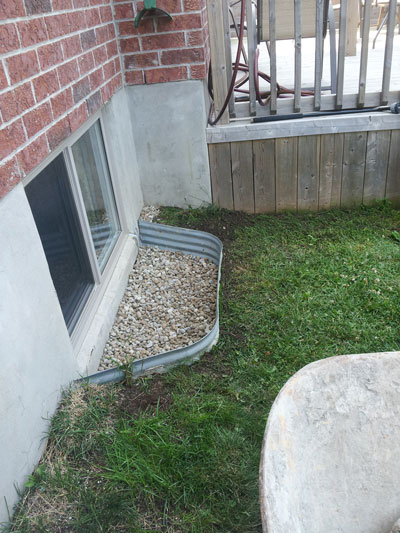
- Clear and, if needed, rebuild window wells with proper drains and gravel, and add covers that fit.
- Repair or replace broken gutters, and upsize if they overflow during heavy rain.
- Walk the discharge line during a storm to verify water moves freely to the outlet and does not pool near the house.
These steps cost little compared to a flooded basement and complement any long term waterproofing.
London specific wrinkles I watch for
Older neighborhoods in Old North, Wortley Village, and the Ridge often have a mix of stone, block, and early poured foundations. Stone foundations are porous by nature and breathe differently. They benefit from exterior drainage improvement and gentle interior control rather than hard negative side coatings that trap moisture. Block walls built in the 50s and 60s may have rotted bottom courses where the cores sat wet for decades. Expect some rebuilding during serious remediation.
Newer subdivisions on former farmland have deep topsoil over dense clay. Builders sometimes provide interior drains that meet code on paper but stop short of garage cold joints or porch footings. I have pulled up slabs and found standing water in isolated pockets. A thoughtful extension of the interior drain with cross ties solves these dead spots. On streets with higher water tables, sumps cycle hard during spring. Those are the homes that need robust discharge design and backups.
The Thames River corridor introduces peculiar patterns. After extended rain, river level rises slowly and holds. Adjacent lots see groundwater push in even if it did not rain that day. I have fielded calls where homeowners swore a pipe burst, only to find a sump that could not catch up with delayed river influence. The solution is not a repair of the plumbing, but a capacity and backup strategy for the pump.
Foundation repair and waterproofing go hand in hand
When walls bow or settle, you cannot caulk your way out. Structural stability comes first. For block walls with mild bowing, carbon fiber reinforcement correctly spaced and epoxied to clean block faces provides a low profile fix that blends with future finishing. More pronounced movement, often visible as stair step cracks in mortar or measurable deflection at midspan, calls for engineered solutions like helical tiebacks that anchor the wall into stable soil, combined with interior drains to relieve water pressure.
Settlement shows up as differential cracks, doors that stick, and sloped floors. Underpinning with helical piles or push piers may be required. In London, Ontario, I see settlement in pockets where fill was placed unevenly during subdivision development. Waterproofing remains important after structural work because water is both a trigger for movement and a source of ongoing basement damage. Sequencing matters. If a wall needs reinforcement, complete that before or alongside your drainage installation.
If you search for foundation repair London, Ontario, you will see a mix of companies that focus on structure and those that focus on water. The best projects blend both skill sets. When you interview contractors, ask who they partner with and how they coordinate. A single point of accountability pays off when an unexpected issue surfaces mid job.
A brief story from a midwinter thaw
A homeowner in Northwest London called after water crept across his rec room during a January thaw. Outside, downspouts were frozen half shut, and the backyard swale was ice. Inside, the slab was sweating lightly, but a distinct trickle ran from the back corner. The house had a sump, quiet as a mouse. We lifted the lid and found the float buried against a tangle of cords. The pump was fine, the installation was not.
We re hung the pump with a rigid stand, replaced the tether float with a vertical switch, swapped in a clear check valve to confirm function at a glance, and heat traced the first metre of discharge where it passed through the unheated garage. We also cut a short interior drain in that back corner and tied it into the pit. The next thaw, the alarm chirped once, then stayed silent as the system kept up. No water on the carpet. Sometimes waterproofing is not a grand project, but a set of small corrections informed by what the house tells you.
Long term care so your fix stays fixed
Basement waterproofing is not a set and forget affair. Silt collects. Pumps age. Landscapes change. A simple maintenance plan keeps surprises at bay. Twice a year, test the sump pump and backup. Pour a few buckets of water in to simulate a storm. While the pump runs, walk the discharge path to its end. Look and listen for leaks, vibration, or ice risks. Clean the pit of debris that can jam a float. Replace batteries on backup systems as the manufacturer recommends, often every three to five years.
Outside, maintain grade and keep mulch and beds from creeping up above the sill. If you aerate lawns, avoid piercing any buried discharge lines. After winter, check extensions and re secure anything loosened by snow removal. Indoors, run a dehumidifier during humid months and set it so the basement hovers near 45 to 50 percent RH. That level protects finishes without overdrying the structure.
If you have a French drain, especially an interior one, ask your installer if there are accessible cleanouts. A quick flush every few years goes a long way. If you notice new patterns of efflorescence or changes in pump cycling, investigate. Most problems whisper before they shout.
Choosing the right path for your home
There is no universal answer for a wet basement in London, Ontario. The right solution blends site work, drainage, mechanical pumping, and, at times, structural reinforcement. The homeowner’s job is to observe carefully, address surface drainage, and hire people who explain cause and effect clearly. The contractor’s job is to design a system that respects the way water moves in our soils and seasons.
If you remember one principle, make it this: do not trap water, guide it. French drains do their work when they give water an easy path away from the wall, and sump pumps earn their keep when they discharge that water far from the foundation without freezing or backing up. A well considered plan delivers more than a dry basement. It buys peace of mind during a thunderstorm in July and a thaw in February, which, in London, might be the true test of any basement waterproofing effort.
Ashworth Drainage — Business Info (NAP)
Name: Ashworth DrainageAddress: 514 Hale St, London, ON N5W 1G8
Phone: (519) 660-9375
Website: https://www.ashworthdrainage.ca/
Email: [email protected]
Hours:
Monday: 9:00 AM – 5:00 PM
Tuesday: 9:00 AM – 5:00 PM
Wednesday: 9:00 AM – 5:00 PM
Thursday: 9:00 AM – 5:00 PM
Friday: 9:00 AM – 5:00 PM
Saturday: Closed
Sunday: Closed
Open-location code (Plus Code): XRR3+HV London, Ontario
Map/listing URL: https://maps.app.goo.gl/9kaoXAxRtJRP1ThS9
Embed iframe:
Socials (canonical https URLs):
Facebook: https://www.facebook.com/ashworthdrainage/
X: https://twitter.com/ashworthrules
Instagram: https://www.instagram.com/ashworthdrainage/
https://www.ashworthdrainage.ca/
Ashworth Drainage provides basement waterproofing and foundation repair services in London, Ontario and surrounding areas in Southwestern Ontario.
The company helps homeowners address wet basements, water intrusion, and drainage issues with solutions that fit the property’s conditions.
Service requests can include foundation repair, waterproofing options, sump pump and drainage-related work, and related assessments.
Ashworth Drainage is based at 514 Hale St, London, ON N5W 1G8.
To reach the team, call (519) 660-9375 or email [email protected].
Business hours are Monday to Friday 9:00 AM–5:00 PM, with the office closed Saturday and Sunday.
For directions and listing details, use the map listing: https://maps.app.goo.gl/9kaoXAxRtJRP1ThS9.
Popular Questions About Ashworth Drainage
What does basement waterproofing help prevent?Basement waterproofing is intended to reduce water intrusion and moisture problems that can lead to dampness, leaks, odors, and damage over time.
How do I know if I may need foundation repair?
Common signs can include visible cracks, water seepage, shifting or uneven areas, or recurring moisture problems; an on-site assessment is usually the best way to confirm causes and options.
What areas does Ashworth Drainage serve?
Ashworth Drainage serves London, Ontario and surrounding areas in Southwestern Ontario.
What are Ashworth Drainage’s hours?
Monday–Friday 9:00 AM–5:00 PM; Saturday closed; Sunday closed.
How can I contact Ashworth Drainage?
Phone: +1-519-660-9375
Email: [email protected]
Website: https://www.ashworthdrainage.ca/
Map: https://maps.app.goo.gl/9kaoXAxRtJRP1ThS9
Facebook: https://www.facebook.com/ashworthdrainage/
X: https://twitter.com/ashworthrules
Instagram: https://www.instagram.com/ashworthdrainage/
Landmarks Near London, ON
1) Kiwanis Park2) Western Fair District
3) Covent Garden Market
4) Victoria Park
5) Budweiser Gardens
6) Museum London
7) Fanshawe Conservation Area