Backyard Drainage London, Ontario: DIY vs. Professional Installation
Water behaves differently in London, Ontario than in many other places. Clay-heavy subsoils, generous spring melt, and sudden summer downpours create ideal conditions for saturated lawns and soggy side yards. On newer infill lots, the issues are amplified by tight setbacks and shallow swales that struggled even in design, let alone after a decade of settling. Whether you tackle backyard drainage yourself or bring in help, the decisions you make early on echo for years in foundation health, lawn usability, and the look of your property.
Why managing water here feels more complicated than it should
London sits in a zone with freeze-thaw cycles stretching from late fall into early spring. Water saturates soil in October, then locks in place under frost. When a January thaw hits, ground near the surface is still rigid while liquid water tries to move. That pressure pushes water toward the path of least resistance, often perimeter footings or any trench that wasn’t backfilled or compacted well. The natural clays and silts south of the river act like a stubborn sponge. Once they take on moisture, they release it slowly, which is why you might still see ponding days after the rain stops.
Municipal design standards count on two things: proper grading and free-flowing swales that direct runoff to the street or a rear catch basin. In practice, fences, gardens, and shed pads interrupt these planned routes. After a few seasons, soil heaves and settles, grading drifts, and the system no longer works as intended. When owners start searching for backyard drainage London, Ontario options, they often land on french drains and weeping tiles as candidates. Both can be excellent tools, but only when matched to the real problem.
Start with diagnosis, not a trench
Water at the surface and water at foundation depth are often two separate issues. A soaked lawn after a thunderstorm usually points to grading or surface conveyance. Damp basement walls after a week of light rain point to deeper soil saturation and hydrostatic pressure. A quick walk in a storm tells you the most. Watch where sheets of water collect, where they sit, and how they leave the yard. If you cannot observe during rain, hose testing can be surprisingly revealing if you run it for an hour at a slow flow and take notes.
Pay attention to downspouts. A third of backyard drainage headaches begin at the eaves. Short leaders that dump 800 to 1,200 litres from a roof face within half a metre of the foundation saturate the first trench of soil, which then invites moisture inward. Extend those leaders 3 to 4 metres where possible, and you remove a major driver of dampness without picking up a shovel.
Soil texture matters. Scoop a handful, wet it, and roll it into a ribbon. If it holds together in a long, smooth strip, you are in clay territory. That will guide trench depth, pipe slope, and fabric choices if you later pursue french drains.
What a french drain actually does here
In the local lexicon, people often use “weeping tiles” and “french drains” interchangeably. Historically, weeping tiles in London meant the perforated clay or plastic pipe installed at footing level outside the foundation, designed to relieve groundwater and feed a sump or storm line. A french drain, by contrast, is a shallow trench with perforated pipe, wrapped in geotextile and backfilled with clean stone, intended to intercept surface runoff or the upper soil layer of saturation. You can use a french drain to carry water from a wet lawn to a safe outlet. You do not usually use it to fix basement leaks caused by failed foundation drainage.
In many backyards, a well designed trench 300 to 450 mm deep with 1 to 2 percent fall will quietly collect the first flush of water and convey it to a lower swale, a dry well, or a sump discharge area that meets municipal rules. If you see ads for french drains London, Ontario promising bone-dry basements, be cautious. These systems shine at capturing lateral surface water, not fighting groundwater at footing depth.
Grading and surface fixes that solve a surprising number of problems
I have walked dozens of lots where owners wanted complex weeping tiles London, Ontario solutions, yet the fix was a regrade plus one thoughtful swale. A proper grade aims for at least 150 mm of fall in the first 2 metres from the foundation. That is roughly a 7.5 percent slope, and it is achievable with a few yards of screened topsoil and some patience with a rake and a 2.4 metre straightedge.
Swales should be shallow and broad. Think of a gentle valley that guides water without turning into a trench you trip over. Sod stitched properly after shaping will root in a couple of weeks and stand up to typical flows. Paired with 3 to 4 metre downspout extensions, this approach resolves many cases of backyard drainage London, Ontario without piping at all.
When a french drain makes sense
A french drain earns its keep in three scenarios. First, a fence or hardscape creates a pinch point that cannot be regraded without reworking the whole yard. Second, a neighbour sits higher and sends you a steady trickle that overwhelms the edge. Third, a consistent low spot holds water despite reasonable grading, often because of underlying clay and a lack of natural outlet.
In these spots, a perforated pipe installed level or with gentle fall, surrounded by clean 19 mm stone and wrapped in non-woven geotextile, acts as a pressure relief. It collects water that wants to move sideways and gives it a faster path. The pipe itself does not suck water out of dry soil. It only helps when there is water to move, which means placement matters more than depth beyond frost concerns and outlet feasibility.
DIY installation, the right way in our soils
A homeowner with patience, a transit level or laser, and respect for utilities can install a reliable french drain. The material list is not exotic. You are after a durable non-woven fabric, a full-length run of 100 mm perforated pipe with a continuous filter sock or a wrapped stone envelope, clean angular stone, and fittings that simplify maintenance at access points. Give yourself a full weekend for 15 to 20 metres, more if access is tight.
Here is a compact sequence that works well in London’s conditions:
- Call Ontario One Call for locates, stake route, and confirm you can discharge on your lot. Snap a chalk line for slope targets at 1 to 2 percent toward a legal outlet like a dry well on your property.
- Strip sod carefully, dig a trench 300 to 450 mm deep and 300 mm wide, and shape a smooth base. Lay non-woven geotextile with enough overlap to wrap back over the top later.
- Place a bed of clean 19 mm angular stone, set 100 mm perforated pipe with the holes oriented correctly for your design, and verify fall with a level as you go.
- Backfill with more clean stone to 50 to 75 mm from final grade, fold fabric over the top for separation, then cap with a thin soil layer and relay sod or use a decorative stone strip as a visible maintenance path.
- Provide a cleanout at one end with a vertical riser and ensure the outlet remains protected from animals, mulch, and snowplow debris with a grate or rodent screen.
That sequence leaves out the cursing that sometimes accompanies trenching in compacted clay. A flat shovel and a trenching spade help, as does pausing when you hit smear-prone layers. Keep the trench bottom roughened slightly rather than polished slick to avoid creating a mini clay bowl.
Common mistakes I see in the field
Two errors show up more than any others. The first is burying pipe in pea gravel without fabric. Pea gravel rounds off and behaves like marbles. It does not interlock, so it shifts under freeze-thaw, and fines migrate easily into the voids. Without a non-woven wrap, your pipe becomes a silt filter and then a silt plug within a couple of seasons. Use angular stone and a proper fabric barrier.
The second is wet basement london ontario a dead-end system with no thought to discharge. A drain needs an outlet. Sending it to a low spot with no capacity is not a plan. If the city has a rear-yard catch basin and you lack rights to connect, respect that. Tying in without permission brings fines, not to mention frozen liability when things go wrong.
A close third is trenching too deep without considering frost. In our winters, deep saturated stone can remain locked and slow to thaw. Unless you need to catch a deeper flow line, stay in the top 450 mm and prioritize slope and outlet reliability over depth.
The legal and safety guardrails in London
Before any digging, Ontario One Call is a must. Expect Bell and Rogers lines near side yards, gas at typical service depths, and hydro in unexpected diagonals on older properties. Marking and hand digging inside the tolerance zone beats the alternative.
Discharge rules matter. London generally prohibits connecting private drainage directly to the sanitary sewer. Some properties have legal storm connections or sump pump discharges that daylight to the lawn. If you plan to add a dry well, size it with a realistic drawdown rate for clay. A single cube of stone often disappoints. Think in the range of 0.4 to 0.6 cubic metres of storage for every 10 square metres of drainage area as a starting point, then verify against your soil’s percolation.
Noise and working hours have bylaws too. If you are running a mini excavator on a Saturday, check the window you are allowed to operate. Good neighbours make good drainage projects.
The value of experienced drainage contractors in London, Ontario
There is a reason drainage contractors London, Ontario stay busy after every spring thaw. They bring laser levels, compaction gear, and a practiced eye for grading that a weekend warrior usually lacks on the first go. They also know the local subsoils by the block. In Westmount and White Oaks, for example, clay bands at predictable depths change how trenches behave once opened. In Old North, root networks complicate trench placement more than in newer subdivisions.
Professionals usually package grading with piping. A typical plan might include reestablishing positive slope away from the foundation, cutting a shallow swale along a fence, and adding a 15 metre french drain that leads to a gravel sump set back from trees. Done as one scope, this combination often costs less than you would think because machine time for grading is already on the ticket.
Where weeping tiles London, Ontario become part of the conversation is with basement moisture that persists despite solid surface fixes. Replacement or augmentation of foundation drains sits in deeper, specialized territory. That work often requires excavation to the footings, waterproofing membranes, and tie-ins to a sump or storm connection. It is not a DIY weekend, and it is not cheap, but it can be the right intervention when the problem is hydrostatic pressure rather than surface runoff.
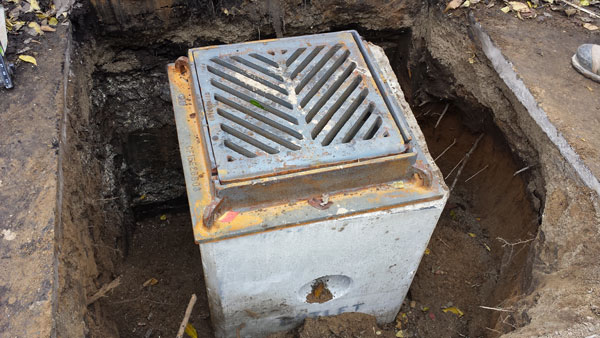
Costs you can reasonably expect
For DIY french drains using quality materials, homeowners commonly spend 30 to 45 dollars per linear metre for pipe, stone, fabric, and fittings. Add tool rental and disposal fees, and a 20 metre system might land in the 900 to 1,400 dollar range if you do the labour. wet basement cleanup london Include topsoil and sod to restore surfaces and you can add a few hundred more.
Hiring out, shallow french drains with restoration often price between 90 and 180 dollars per linear metre in London, depending on access, depth, and disposal. A full grading refresh for a typical backyard sits in the 1,500 to 3,500 dollar band. Foundation-level weeping tile replacement, including excavation, waterproofing, and sump integration, usually starts in the low five figures and climbs with depth, obstructions, and finish restoration.
Ask for itemized quotes. If a contractor lumps everything into a single figure with no description of base prep, fabric type, and stone gradation, you are comparing fog to fog.
Maintenance and what to expect over time
A well built french drain does not demand much. Keep outlets clear and visible. After big storms, walk the line and check for unexpected sinkage that suggests settlement. Cleanouts at the ends make occasional flushing easy. In clay-heavy yards with high leaf load, a quick rinse once a year keeps fines from posting up at bends.
Sod over a drain can look slightly different in late summer because of moisture availability. If you see deep green stripes while the rest of the lawn tans a bit, that is normal. It tells you the system is collecting and metering out water in the stone bed.
Dry wells will eventually load with fine particles at the fabric interface. That is not failure, that is the filter doing its job. The timeline for refresh is long in most backyards, often 8 to 15 years, and many never need intervention if pretreatment via grass or a small mulch forebay upstream catches sediment.
Seasonal timing and phasing your project
London’s best window for earthwork runs from late April through early November. Spring installations benefit from softer soil but risk smear if you dig wet clay. Late summer and early fall offer stable conditions, and grass establishes quickly in warm soil. Avoid opening trenches right before a hard rain, and never leave fabric and stone uncovered for long in wind. If you must phase, do grading first and observe. Often, the second phase gets smaller after you see how far proper slope and downspout management carry you.
Winter trenching is tempting during a thaw, but it is risky. Frost lenses lurk in shaded ground, and once you break the surface, the sidewalls can crumble unpredictably. If you must address an urgent issue in winter, surface extensions for downspouts and temporary channels cut through snow can bridge you to spring.
A brief field story
A family in Byron called after every storm left a puddle square in the middle of their play area. The initial request was for a 25 metre french drain from corner to corner. A site walk showed downspouts dumping near the back door and a barely there swale along the right fence. We extended downspouts 4 metres into the yard, regraded 14 metres along the fence to reestablish a gentle valley, and added just 10 metres of perforated pipe with clean stone at the lowest run near a gate where water pinched. The total was half the original budget, the lawn dried in under a day after rain, and the kids kept their play space intact. The french drain played a supporting role, not the whole show.
When DIY is wise, and when to bring in help
If your yard has a clear low spot, decent access, and no signs of basement moisture, DIY can be smart. You control the details and save on labour, and you will learn your property’s water habits. If you see efflorescence inside foundation walls, repeated sump cycling during minor rains, or groundwater seeping at slab cracks, a conversation about deeper systems is in order.
Here are reliable signs it is time to call experienced drainage contractors London, Ontario:
- Persistent dampness in the basement, especially after light, longer rains rather than just downpours.
- Grading conflicts that require machine rework, tree root protection, or retaining solutions near lot lines.
- No legal or practical outlet visible for a DIY drain, or disputes with neighbours over shared swales.
- Evidence of soil movement near the foundation, such as gaps at steps or tilted pavers along the wall.
- Prior DIY drains that failed or clogged quickly, suggesting specification or soil mismatches.
A good contractor will not just sell pipe. They will talk grading, roof water management, soil types, and restoration, then offer a phased plan if you want to start small.
Matching weeping tiles and french drains to the real problem
If your search starts with french drains London, Ontario because that is what everyone seems to install, pause and line up the problem with the tool. French drains handle surface and shallow subsurface flows. Weeping tiles manage groundwater at the level that pushes on your foundation. Sometimes you need both, but often you need neither if grade and roof water are corrected.
An honest assessment blends the two worlds. For example, a home in Oakridge with a slightly negative slope toward the house and clay subsoil might get a regrade along the back, downspout extensions, and a short under-sod trench near a walkway that chronically ices in winter. The basement stays dry because the load on the foundation drops, not because the new pipe is magically powerful.
What to ask before you commit
Ask for fabric specifications, not just “landscape fabric.” Non-woven geotextiles with known flow rates and puncture strength outperform cheap woven rolls meant for weeds. Ask which stone size will be used and whether it is clean, washed material. Ask about slope, outlet protection, and how restoration will be handled.
For foundation-level work, ask how the crew will protect utilities and adjacent structures, which waterproofing membranes and drain boards are planned, and where sump discharge will go. If a quote suggests tying anything to the sanitary line, keep interviewing.
The bottom line from years in these yards
Backyard drainage in London, Ontario is not about chasing the latest trick. It is about reading the site, respecting how water moves in our clays and under our winters, and using simple systems correctly. Grading solves more than half the problems. Thoughtful downspout routing solves another big slice. French drains fill in the gaps where surface fixes cannot quite carry the load. Weeping tiles step in for true groundwater issues.
Whether you pull the shovel yourself or hire out, aim for clarity. Know where the water starts, how it travels, and where you want it to end. Make each choice serve that path. When a yard dries out quickly after rain, lawns thrive, basements breathe easier, and the property feels settled. That is the measure that matters long after the trench is closed and the sod knits back together.
Ashworth Drainage — Business Info (NAP)
Name: Ashworth DrainageAddress: 514 Hale St, London, ON N5W 1G8
Phone: (519) 660-9375
Website: https://www.ashworthdrainage.ca/
Email: [email protected]
Hours:
Monday: 9:00 AM – 5:00 PM
Tuesday: 9:00 AM – 5:00 PM
Wednesday: 9:00 AM – 5:00 PM
Thursday: 9:00 AM – 5:00 PM
Friday: 9:00 AM – 5:00 PM
Saturday: Closed
Sunday: Closed
Open-location code (Plus Code): XRR3+HV London, Ontario
Map/listing URL: https://maps.app.goo.gl/9kaoXAxRtJRP1ThS9
Embed iframe:
Socials (canonical https URLs):
Facebook: https://www.facebook.com/ashworthdrainage/
X: https://twitter.com/ashworthrules
Instagram: https://www.instagram.com/ashworthdrainage/
https://www.ashworthdrainage.ca/
Ashworth Drainage provides basement waterproofing and foundation repair services in London, Ontario and surrounding areas in Southwestern Ontario.
The company helps homeowners address wet basements, water intrusion, and drainage issues with solutions that fit the property’s conditions.
Service requests can include foundation repair, waterproofing options, sump pump and drainage-related work, and related assessments.
Ashworth Drainage is based at 514 Hale St, London, ON N5W 1G8.
To reach the team, call (519) 660-9375 or email [email protected].
Business hours are Monday to Friday 9:00 AM–5:00 PM, with the office closed Saturday and Sunday.
For directions and listing details, use the map listing: https://maps.app.goo.gl/9kaoXAxRtJRP1ThS9.
Popular Questions About Ashworth Drainage
What does basement waterproofing help prevent?Basement waterproofing is intended to reduce water intrusion and moisture problems that can lead to dampness, leaks, odors, and damage over time.
How do I know if I may need foundation repair?
Common signs can include visible cracks, water seepage, shifting or uneven areas, or recurring moisture problems; an on-site assessment is usually the best way to confirm causes and options.
What areas does Ashworth Drainage serve?
Ashworth Drainage serves London, Ontario and surrounding areas in Southwestern Ontario.
What are Ashworth Drainage’s hours?
Monday–Friday 9:00 AM–5:00 PM; Saturday closed; Sunday closed.
How can I contact Ashworth Drainage?
Phone: +1-519-660-9375
Email: [email protected]
Website: https://www.ashworthdrainage.ca/
Map: https://maps.app.goo.gl/9kaoXAxRtJRP1ThS9
Facebook: https://www.facebook.com/ashworthdrainage/
X: https://twitter.com/ashworthrules
Instagram: https://www.instagram.com/ashworthdrainage/
Landmarks Near London, ON
1) Kiwanis Park2) Western Fair District
3) Covent Garden Market
4) Victoria Park
5) Budweiser Gardens
6) Museum London
7) Fanshawe Conservation Area